Before the Train Crosses the River
A Forgotten Railway Branch in Hashimoto, Wakayama
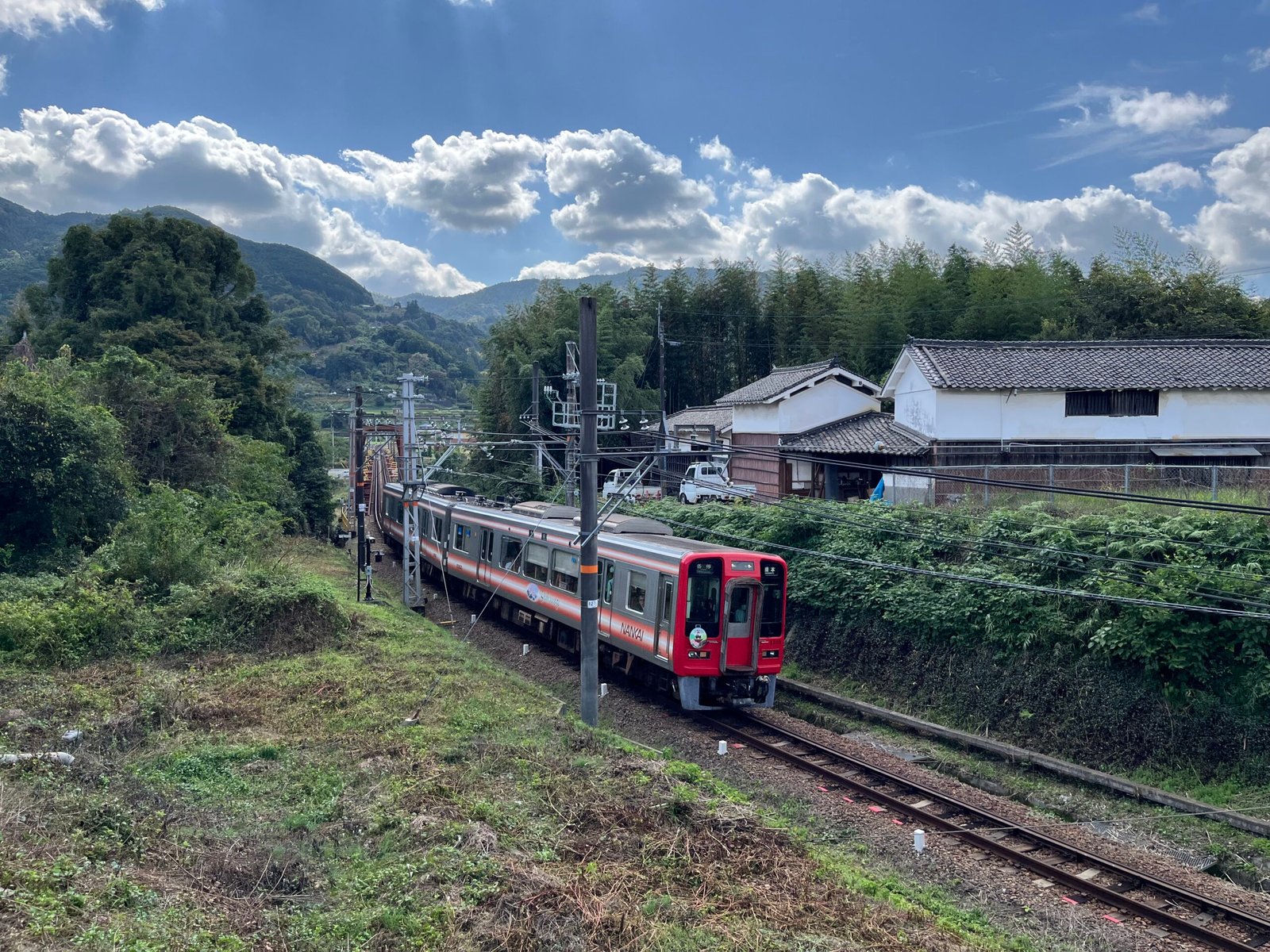
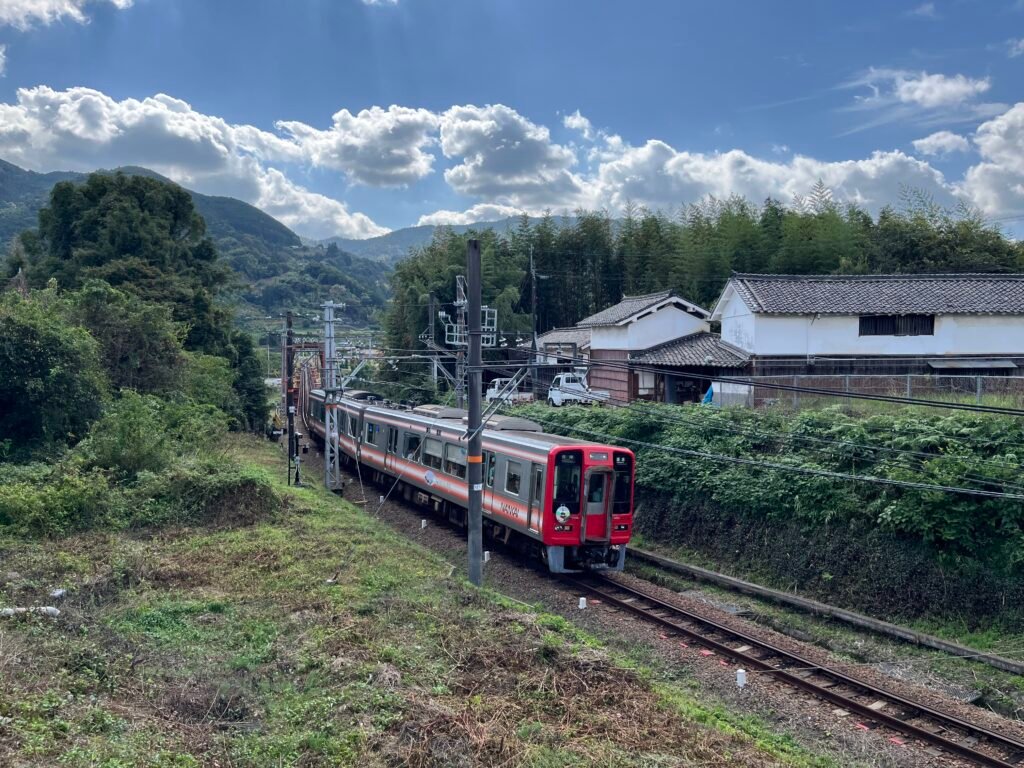
Leaving Hashimoto Station on the Nankai Koya Line, the train makes its way towards Mount Koya.
Just before crossing the railway bridge over the Kinokawa River, there is a small detail in the landscape that most passengers would never notice.
In the early twentieth century, another railway track branched off to the left, leading towards the riverbank.
Its destination was Kinokawaguchi Station — a small freight station that has long since disappeared.
A Railway Built for the River
Kinokawaguchi Station opened in 1915, at a time when the railway towards Mount Koya had not yet crossed the Kinokawa River.
Unlike the stations built to carry passengers, Kinokawaguchi served a more practical purpose. It handled freight, including gravel extracted from the nearby riverbed and timber gathered from the surrounding area.
In 1924, the railway was extended across the river towards Mount Koya. The freight line to Kinokawaguchi then became a branch from a railway junction known as Tsuma Signal Station, located just before the bridge.
From this one small stretch of railway, trains travelled towards two very different destinations.
One carried passengers towards the sacred mountain. The other transported materials that helped build and sustain everyday life.
When the River Was a Place of Work
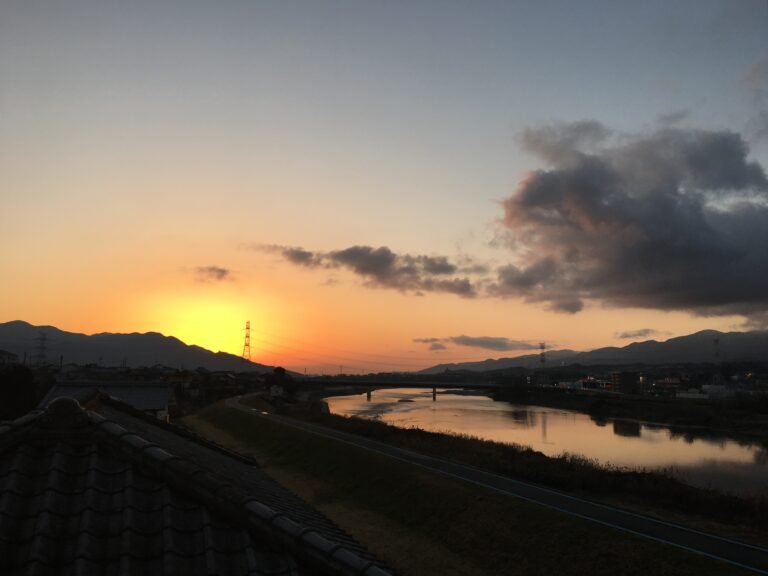
Today, the Kinokawa River is often admired for its broad waters and the mountains rising beyond its banks.
But the river was once an important source of building materials.
Gravel was extracted from its bed and transported by rail. Timber and other goods also moved through this landscape, connecting the river to the wider region.
According to Mr Ooka, a former director of the Hashimoto City Local History Museum, gravel extraction eventually became a concern because it was lowering the riverbed. He recalls that this led to the practice being discontinued.
The Kinokawaguchi freight branch closed on 20 December 1959 — nearly 67 years ago.
The station and its tracks are gone, but the shape of the land near the railway bridge still offers a clue to where the branch once ran.
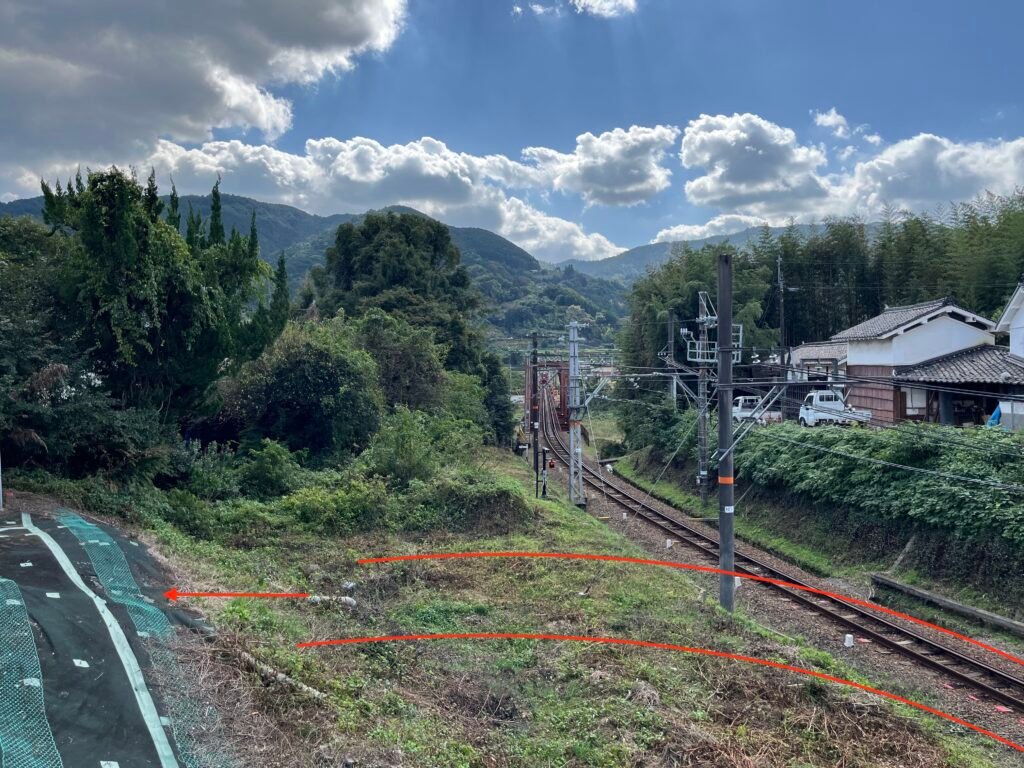
In the accompanying photograph, the red lines indicate the approximate course of the former track, as identified during a local history walk.
The area’s connection to the gravel industry has not disappeared entirely. Nankai Jari Co., Ltd., a company with roots in gravel extraction, continues to operate in fields including construction materials and civil engineering.
The Kinokawa was never simply a beautiful river to look at. It was also a working river, closely connected to the lives and livelihoods of the people who lived beside it.
A Small Walk into the Past
This overlooked piece of railway history can be explored on a short walk from Hashimoto Station.
Along a quiet residential street, a narrow passage between two houses leads towards a viewpoint overlooking the present-day railway.
It is an unassuming entrance, easy to miss unless you know where to look.
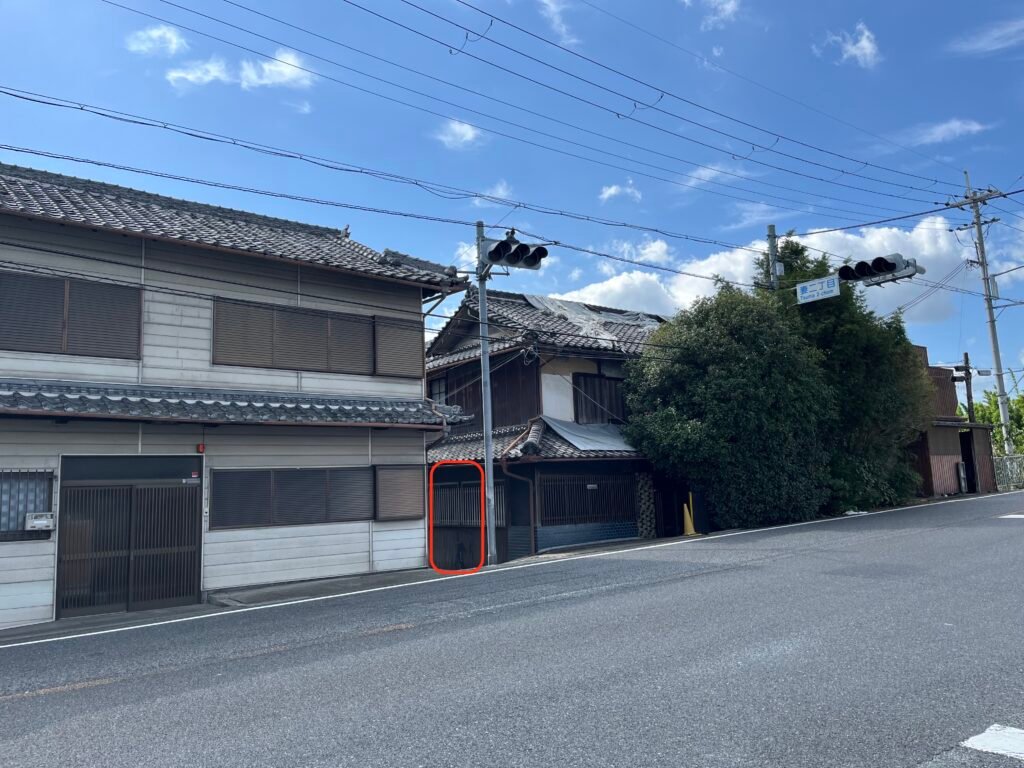
From the viewpoint, you can see the modern Nankai Koya Line and the open ground to its left, where the old freight branch is believed to have diverged towards the river.
A little further along the path, another trace of the old railway can be found in an unexpected place.
Today, a narrow concrete-covered drainage channel runs between the houses. According to a local historian who guided the walk, the railway tracks once followed this route.
It is an easy detail to overlook. Nothing about this quiet residential passage immediately suggests that trains once travelled through it.
Yet this ordinary stretch of ground offers a glimpse of how the landscape has changed, while preserving the memory of what came before.
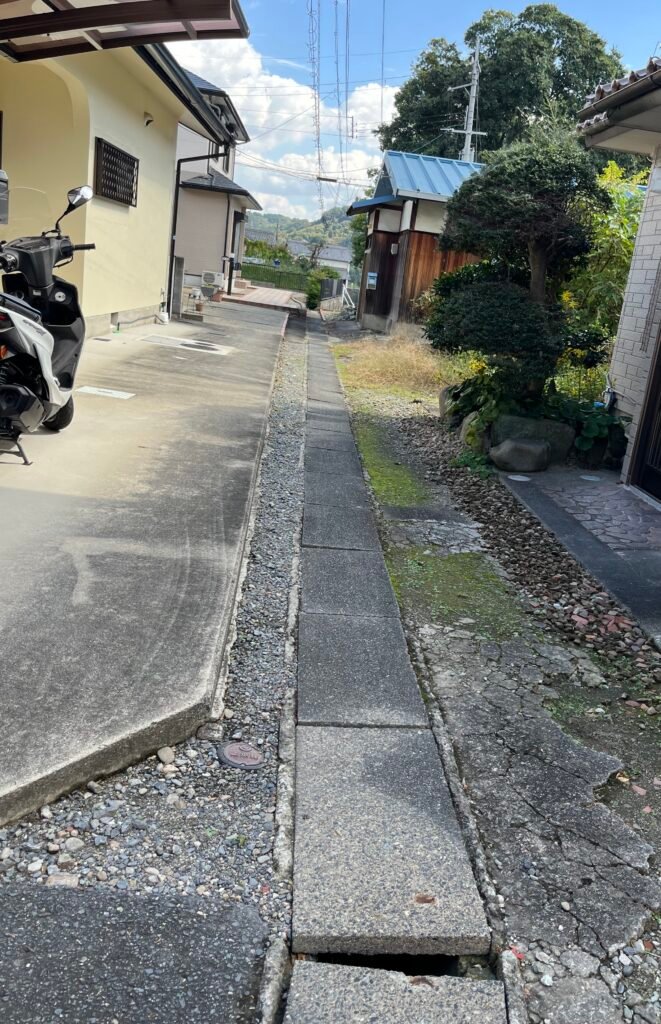
There are no restored railway tracks or museum displays waiting here.
Instead, the landscape itself tells the story.
With a little imagination, it becomes possible to picture the freight trains that once travelled through this quiet corner of Hashimoto, carrying gravel from the river towards the towns and cities beyond.
It is a rewarding little detour for those who enjoy discovering the histories hidden in ordinary places.
As the route passes through a residential area, please stay on publicly accessible paths, respect the privacy of local residents, and keep a safe distance from the active railway.
View the location: Google Maps
And the next time you leave Hashimoto Station by train towards Mount Koya, look to the left just before crossing the Kinokawa River.
There may be nothing remarkable at first glance.
But sometimes, the most interesting stories are found in the places we almost pass without noticing.
Related Posts
 Hashimoto Station — A Brief History Hashimoto, Kinokawa, Koyasan, Nankai Railway, Railway History, Wakayama Opened in 1898, Hashimoto Station became an important railway junction with the… ...
 What Do We Miss When We Simply Change Trains? Hashimoto, Koyasan What if the place you almost passed by held stories you never… ...