Three Small Shrines of “Tsuma no Mori”
Discovering Tsuma no Mori in the Quiet Streets of Hashimoto
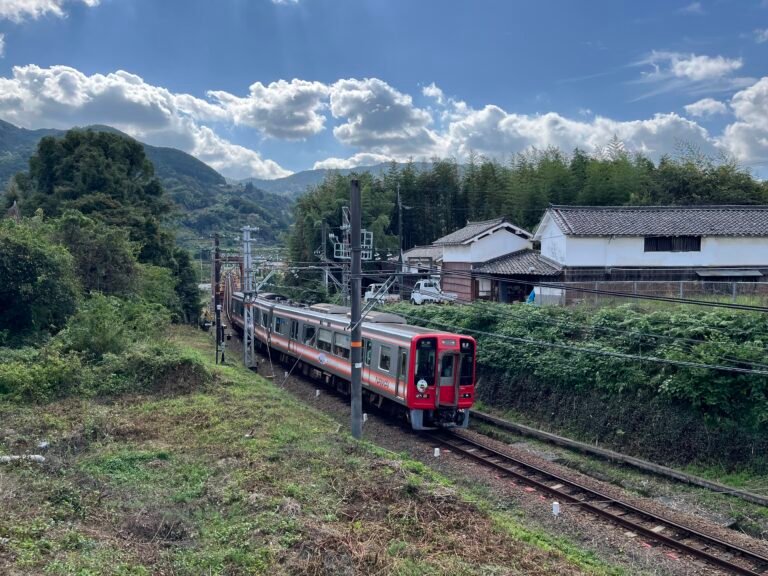
Walk east from Hashimoto Station, into the residential streets of the town.
There are no grand approaches to temples or shrines, no succession of signs pointing towards a famous attraction.
Just houses, narrow streets, and the familiar rhythm of everyday life.
Then, almost without warning, the greenery grows a little denser.
Here, tucked quietly into the neighbourhood, is a small sacred place known as Tsuma no Mori (妻の杜).
What makes it curious is that there are three such places in this part of town.
Nishi no Mori. Naka no Mori. Higashi no Mori.
Why three? How long have they been here?
Not every question has a clear answer.
Yet with a little knowledge of their history, a walk between these three places begins to reveal something of an ancient poem, still quietly present in the landscape of modern Hashimoto.
The Meaning Behind the Name Tsuma
There is something intriguing about the Japanese name Tsuma no Mori.
The word tsuma (妻) means “wife” in modern Japanese. It is also a place name that has survived in this part of Hashimoto.
Mori (杜) is pronounced in the same way as the Japanese word for “forest” (森), but the character used here also evokes a sacred place, often associated with a shrine or a grove of trees.
Together, these words form a name that carries more meaning than a simple translation could convey.
And it is the sound of tsuma that holds the key to understanding a poem preserved in the Manyōshū, Japan’s oldest surviving collection of poetry.
Nishi no Mori (西の杜) — A Wish Beneath the Trees
Our first stop is Nishi no Mori.
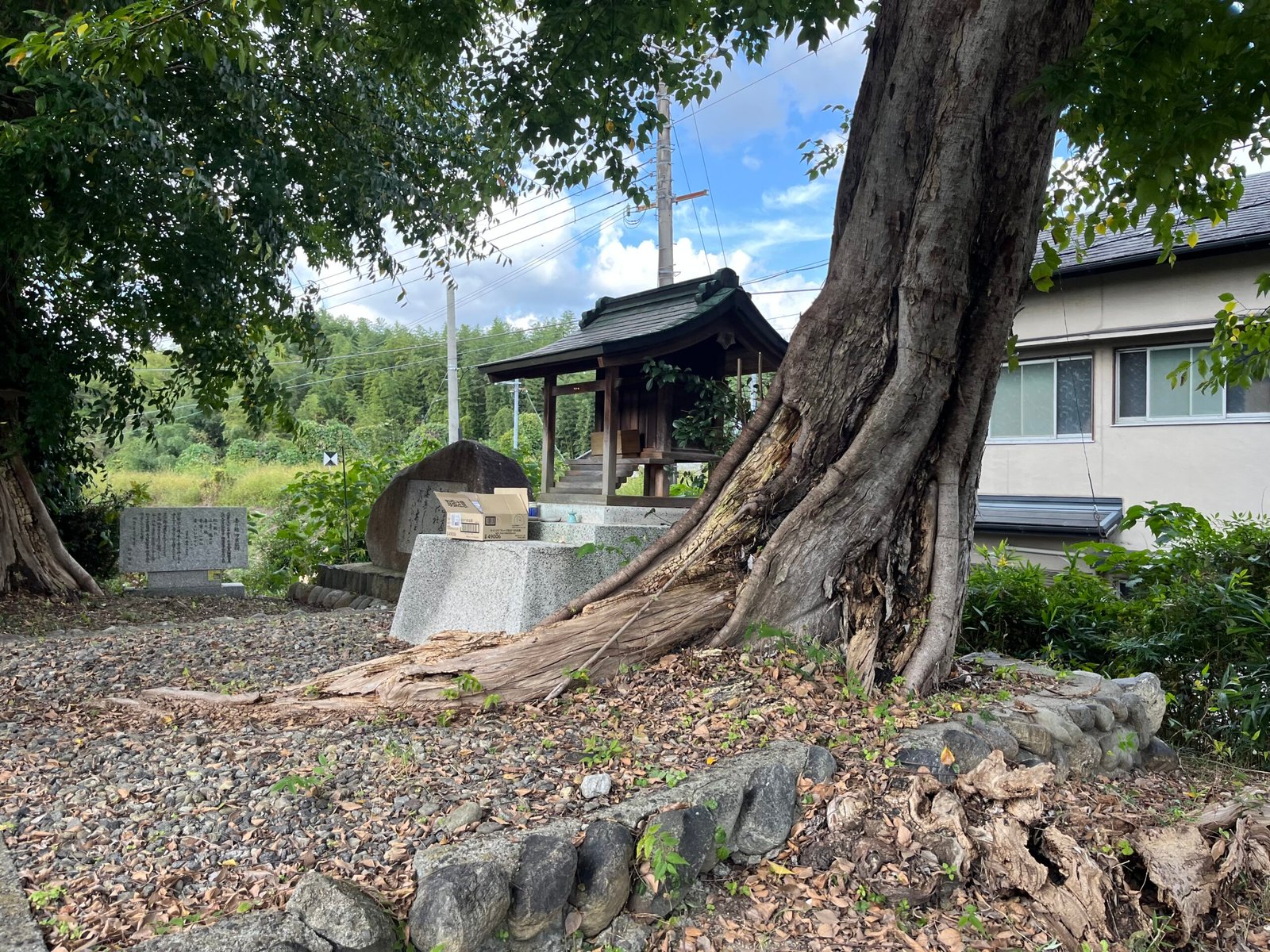
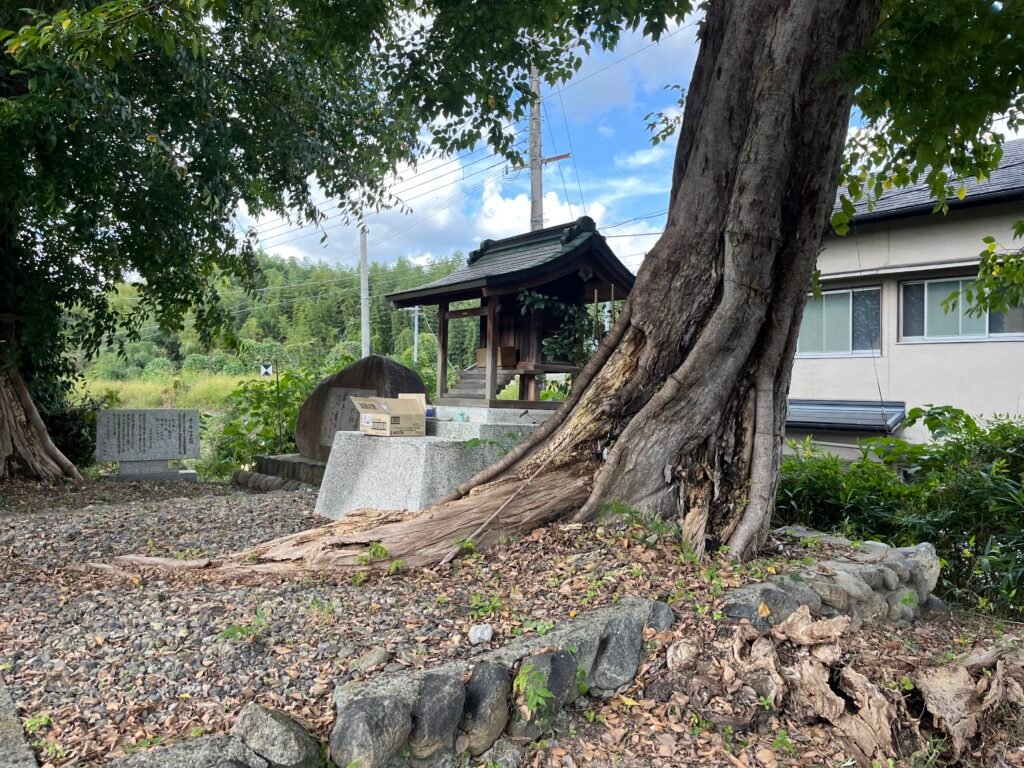
There is no imposing torii gate or grand shrine building to announce its presence.
Instead, a small flight of stone steps invites a moment of curiosity. What might be waiting at the top?
Beyond them, a slightly elevated patch of ground is sheltered by trees, creating a pocket of stillness within the neighbourhood.
Beside the surrounding houses, a tiny shrine stands quietly beneath the shade of an old tree, as though protected by its branches.
Nearby is a stone monument inscribed with a poem.
紀伊の国に止まず通はむ妻の社 妻寄しこせね妻と言ひながら
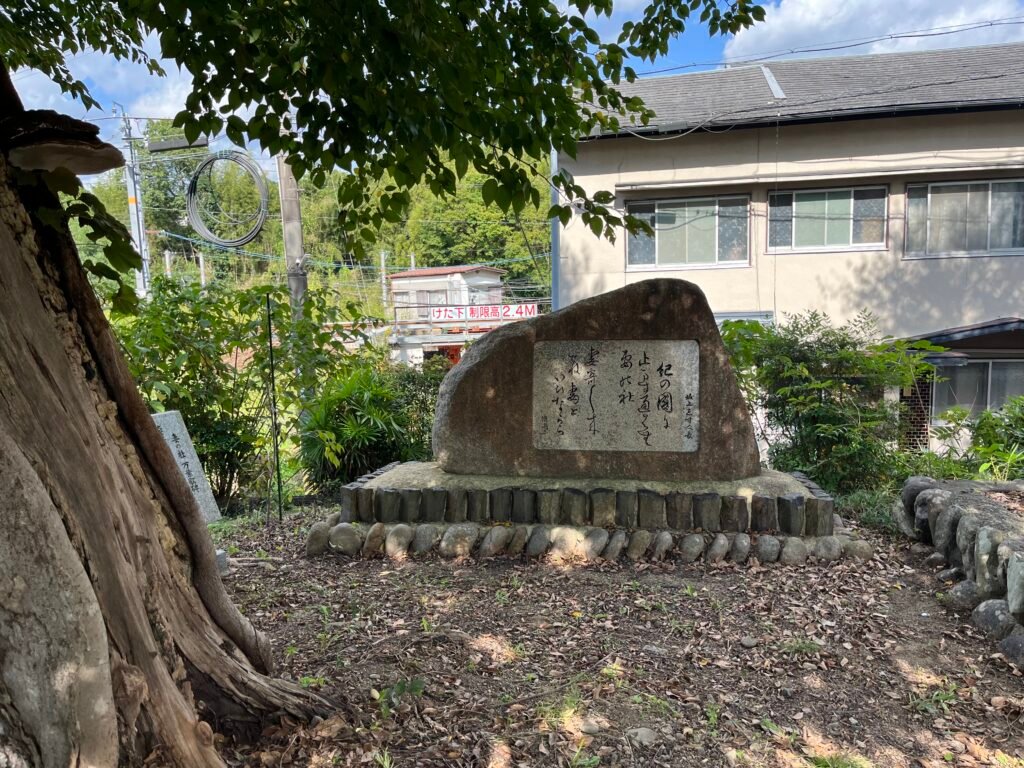
The verse appears in Book Nine of the Manyōshū, an anthology of ancient Japanese poetry compiled in the eighth century.
Its language belongs to a distant age. Even for native Japanese speakers today, understanding the poem without some knowledge of classical Japanese is far from straightforward.
In modern terms, its meaning can be expressed approximately as:
I wish to return to the land of Kii, again and again. O shrine of Tsuma, true to your name, please bring me a wife.
The charm of the poem lies partly in a play on words.
Tsuma refers both to the name of the place and to the Japanese word for “wife”.
The poet addresses the shrine by its name, then asks it to grant a wife of his own.
A small piece of wordplay, carrying a deeply human wish across the centuries.
The identity of the poet remains uncertain. The verse has traditionally been attributed to Sakanoue no Imiki Hitonaga, although its authorship has not been firmly established.
There are also differing views about whether the shrine mentioned in the poem stood at this very location.
And yet, the stories that have survived suggest that generations of local people have continued to value this place and the poem associated with its name.
A Wish for Love, Still Made Today
There is another small detail at Nishi no Mori that catches the eye.
A place to hang wooden wishing plaques, known in Japanese as ema.
You may have encountered them at shrines elsewhere in Japan. Visitors write their hopes or prayers on these small wooden plaques and leave them at the shrine.
It is a familiar custom, but here, the ancient poem and the name Tsuma give it a particular significance.
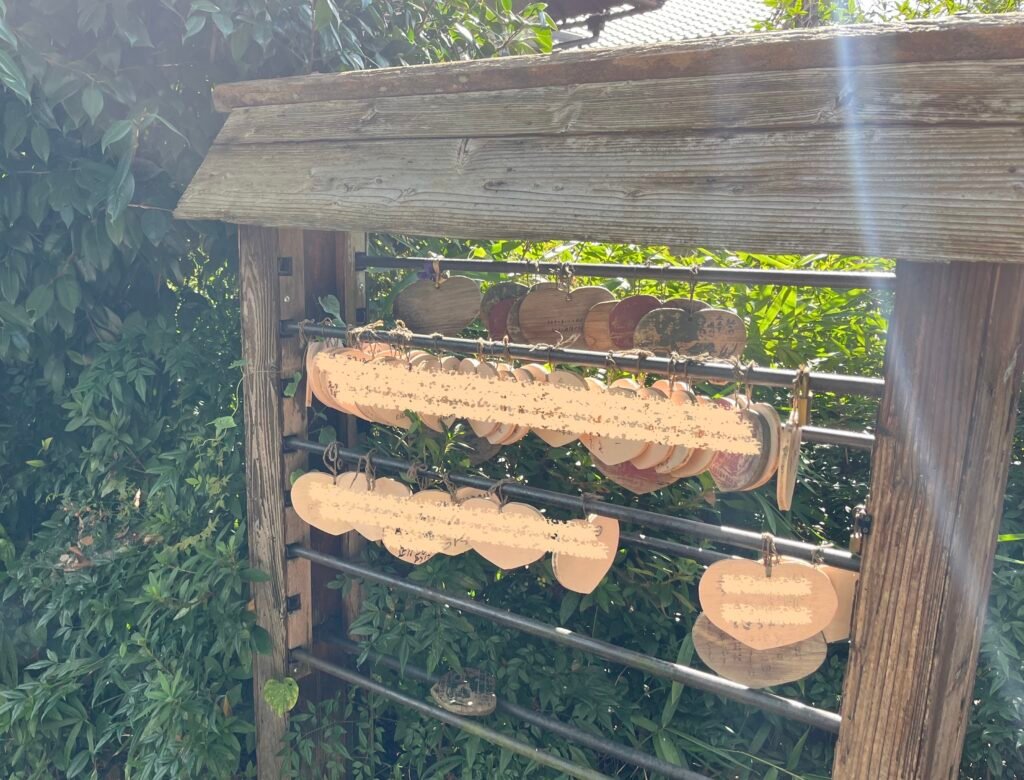
In 2011, local people created a special ema for Tsuma no Mori.
The heart-shaped wooden plaque features a print of the shrine’s surroundings by a local printmaker, together with the ancient poem.
The plaques were sold at the tourist information centre near Hashimoto Station and became popular among people wishing for love and meaningful relationships.
Some of the ema still hanging here carry messages of hope for happiness with someone dear.
More than a thousand years ago, someone expressed a wish for a wife in a poem.
Today, people continue to bring their own wishes for love and companionship to a place bearing the same name.
Standing here, it is possible to feel how an ancient wish has found a way to live on.
Visitor’s Note | Leaving an Ema at Nishi no Mori
Special ema plaques for Tsuma no Mori have previously been available at the Hashimoto Regional Tourist Information Centre, near Hashimoto Station.
If you would like to leave a wish at the shrine, consider stopping by the information centre before beginning your walk.
Please note: Current availability, prices, and stock are being confirmed. This information will be updated once verified.
Naka no Mori (中の杜) — A Small Shrine Hidden Away
Leaving Nishi no Mori behind, we continue through the residential streets.
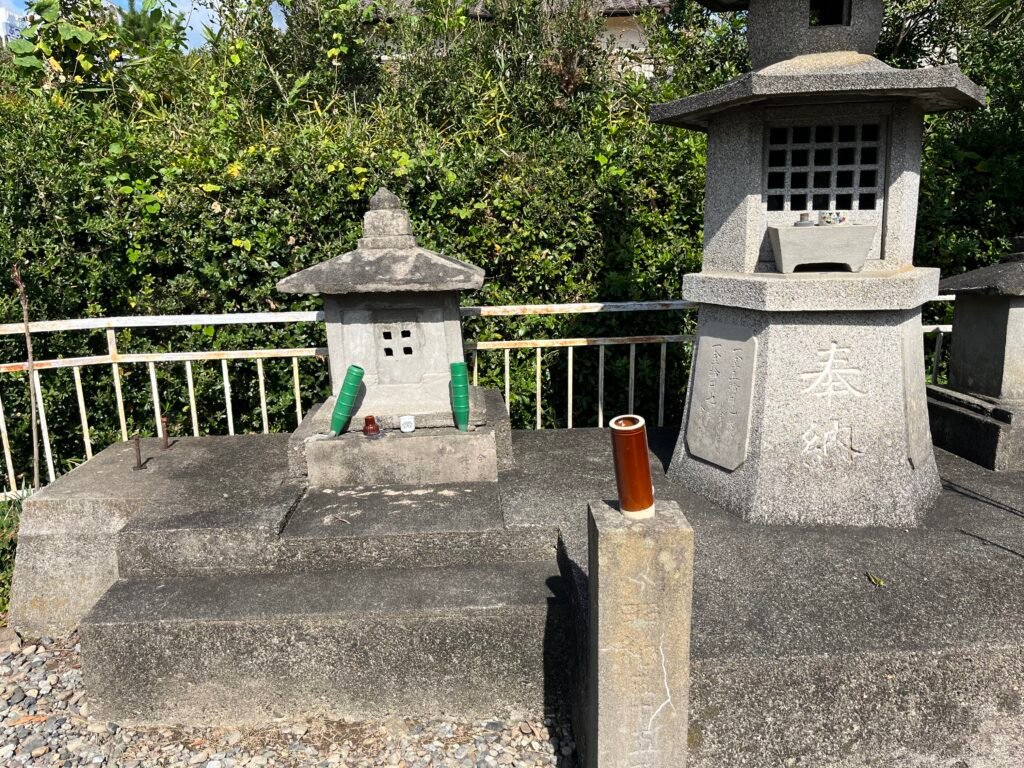
Naka no Mori lies tucked away in a quiet corner of the neighbourhood, almost concealed by trees.
Beyond a pair of stone lanterns stand small wooden shrines, surrounded by greenery.
This is not a garden arranged for visitors, nor a place designed to be admired.
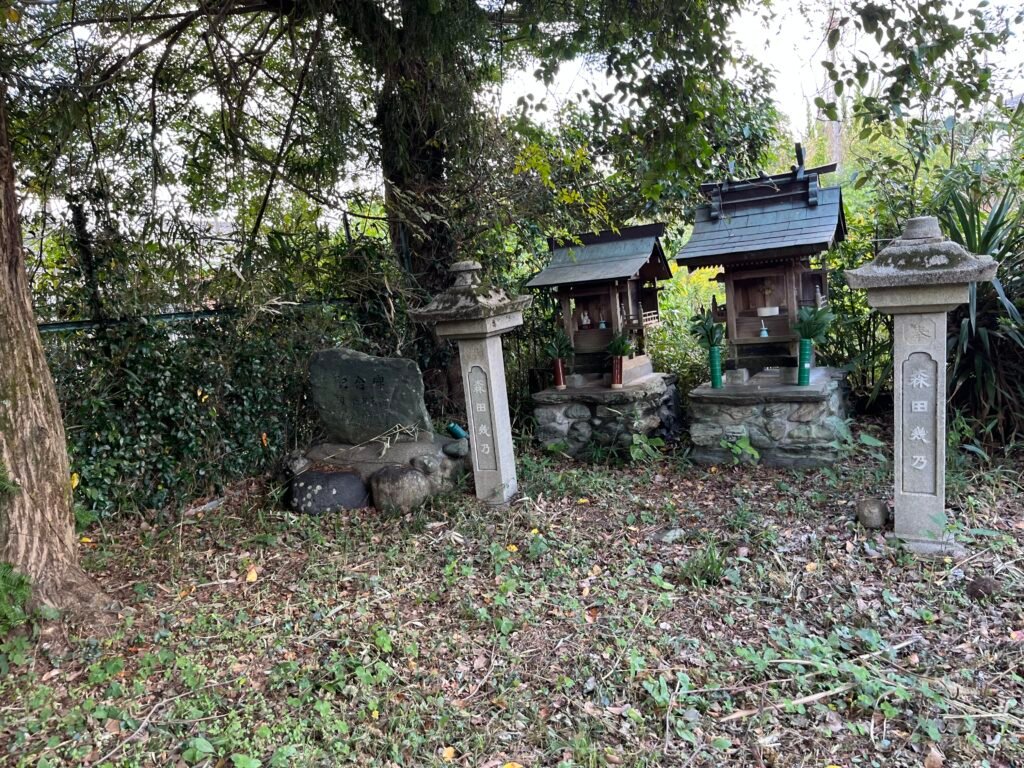
It feels as though everything has simply remained where it has always been.
A first-time visitor might even hesitate, uncertain whether it is appropriate to step inside. Such is the quiet, almost private atmosphere of the place.
Time has softened the surfaces of the stone, while branches stretch gently around the little shrines.
Who built them, and when?
What is their connection to Nishi no Mori?
Reliable records explaining their origins have yet to be found.
Still, there is a sense that many years of quiet devotion have gathered here, among the trees and stones.
A Different Layer of History | Traces of a Forgotten Railway
Near the entrance to Naka no Mori, there is another unexpected detail.
A narrow drainage channel runs between the houses.
According to a local historian, this was once part of the route of a freight railway line leading towards Kinokawaguchi Station.
A walk that began with thoughts of ancient poetry suddenly leads into the history of a much more recent era.
A small shrine. A railway that has disappeared.
Traces of entirely different periods remain, separated by only a few steps in the same neighbourhood.
Read more: Before the Train Crosses the River — A Forgotten Railway Branch in Hashimoto, Wakayama
Higashi no Mori (東の杜) — A Landscape Once Seen by Travellers
Our final stop is Higashi no Mori.
A small stone monument remains here, in a more open setting than the other two sites.
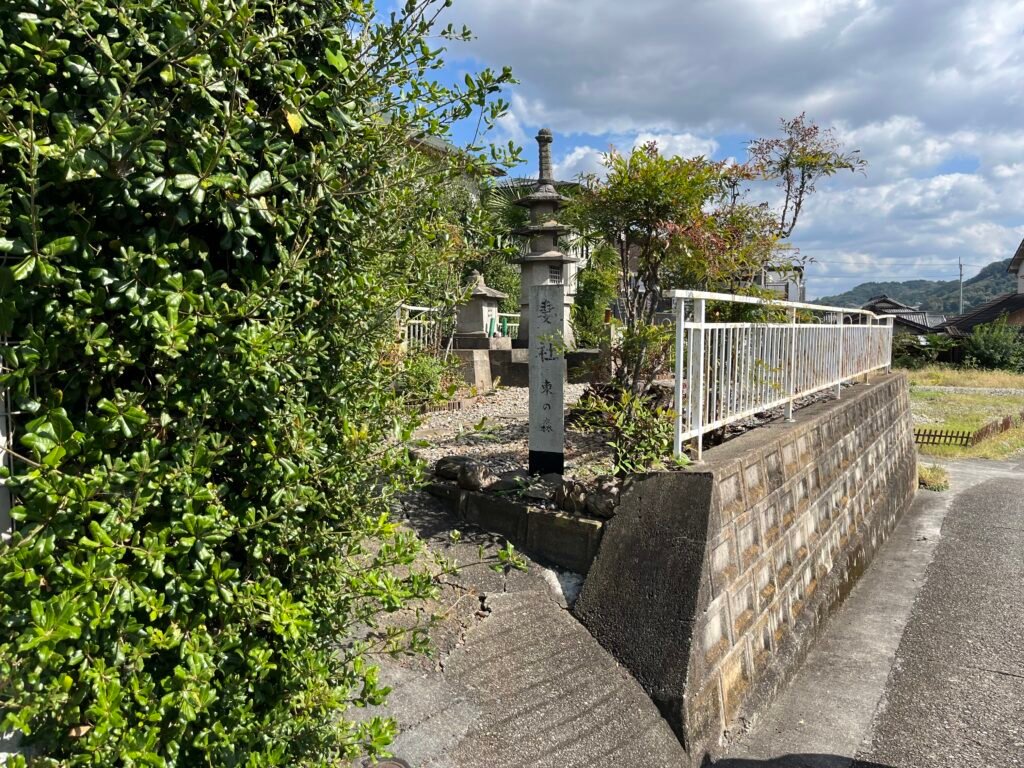
Unlike Nishi no Mori and Naka no Mori, this place is not deeply enclosed by trees.
The stone stands among low hedges, with houses and open sky beyond.
A local historian, Mr Ooka, once shared a thought with me.
Perhaps this area was once open enough to look out across the Kinokawa River. Perhaps travellers in ancient times paused here, taking in the view, resting for a while, or composing poetry as they went.
It is a possibility rather than an established historical fact.
And today, there is no way to know exactly where such moments might have taken place.
Houses have been built, roads have appeared, and the landscape of ancient times can never be seen quite as it was.
Yet looking towards the distant mountains and the expanse of sky, it is tempting to imagine those who passed through this place long ago.
A traveller stopping beside the river.
A moment of rest.
A thought of someone far away, finding its way into a poem.
Could such a moment have unfolded here, more than a thousand years ago?
A Walk That Stays With You
None of the three sites is a well-known tourist attraction today.
There are the trees of Nishi no Mori, the deeper greenery of Naka no Mori, and the stone monument of Higashi no Mori, standing beneath the open sky.
And even after visiting all three, the questions we began with remain.
Instead of searching for definite answers, we find ourselves looking more closely at the trees, noticing the weathered surfaces of the stones, and imagining the landscapes that might once have existed here.
An ancient poem, passed down through more than a thousand years.
The everyday lives of people who have made their homes in this part of Hashimoto, generation after generation.
The three small sites seem to hold something of that passing time, quietly and without ceremony.
If your journey brings you to Hashimoto, consider stepping off the train and taking a short walk beyond the station.
You may not find signs explaining every detail.
But there are places that can only be discovered by walking, looking, and allowing yourself to wonder.
And I believe it is often these quiet, unassuming places that stay with us long after the journey has ended.
Explore the Three Sites
Three quiet places, each with its own traces of Hashimoto’s past.
Nishi no Mori(西の杜)Ancient poem and ema plaques
Naka no Mori(中の杜)Small shrines beneath the trees
Higashi no Mori(東の杜)A stone monument beneath the open sky
YUI Studio is preparing a self-guided walking guide connecting Nishi no Mori (西の杜), Naka no Mori (中の杜), and Higashi no Mori (東の杜). Follow the traces of an ancient poem and the memories of a town, discovering small shrines and weathered stones along the way.
Related Posts
 The Women Who Could Not Enter Koyasan Jison-in, Koyasan, Kudoyama, Women's Pilgrimage Discover the history of women who were once forbidden from entering Koyasan,… ...
 What Do We Miss When We Simply Change Trains? Hashimoto, Koyasan What if the place you almost passed by held stories you never… ...