Risho Gokoku-ji – The Stories a Quiet Temple Holds
An ancient temple supported by samurai families, and an old road that remembers the travellers who passed through.
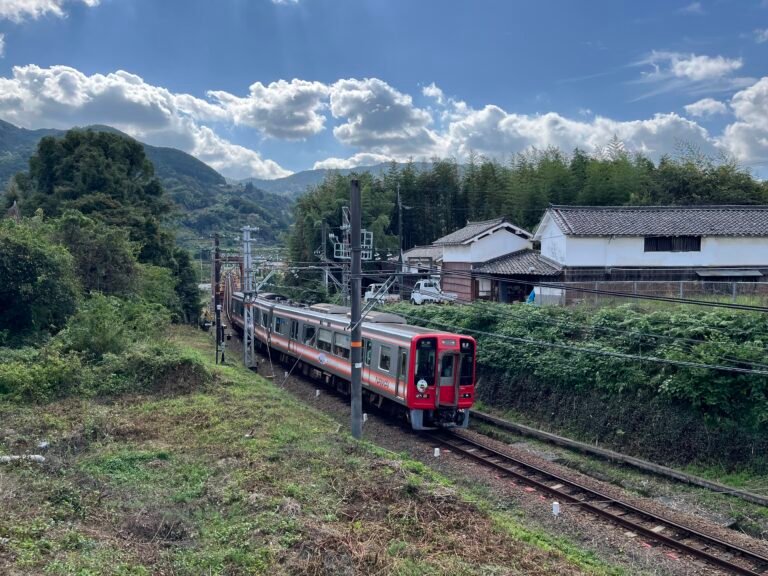
In the eastern part of Hashimoto, Wakayama Prefecture, near the border with Nara, lies the district of Suda.
Here stands a Buddhist temple with a history stretching back more than a thousand years.
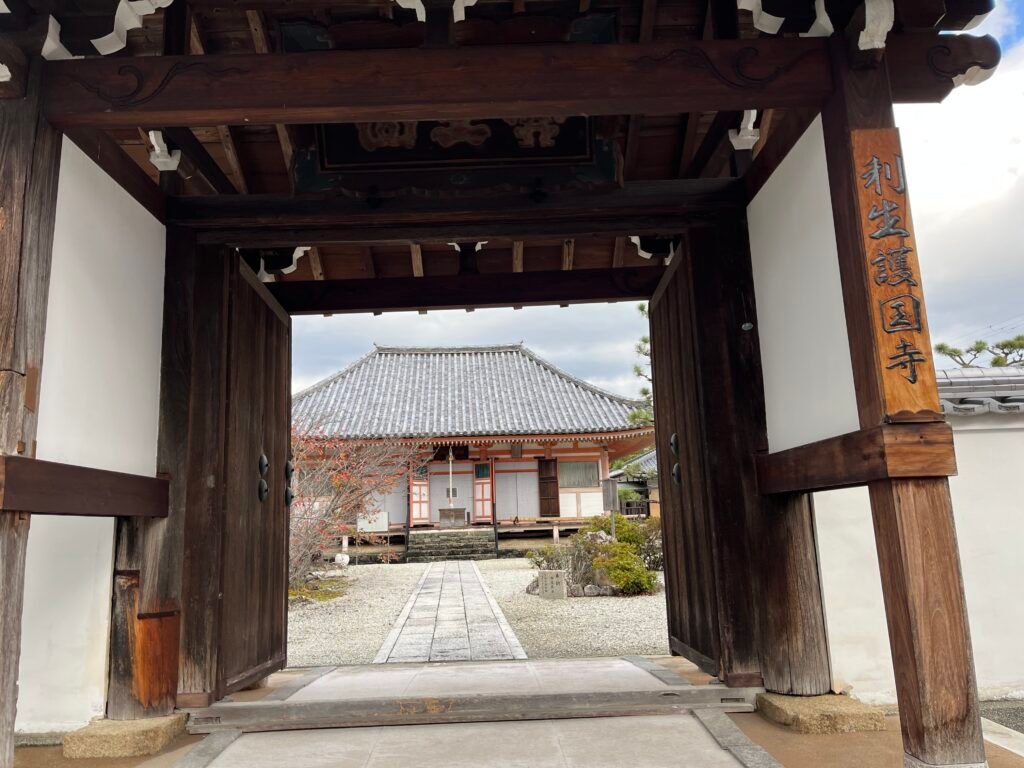
Its name is Rishō Gokokuji.
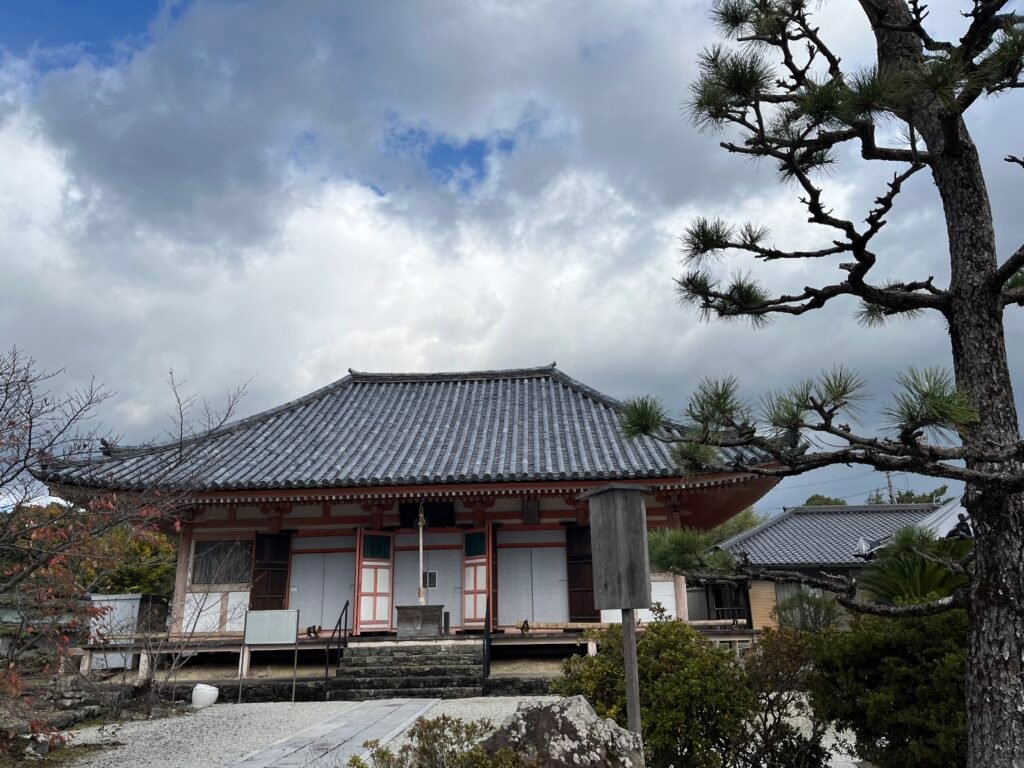
The temple’s quiet main hall is designated an Important Cultural Property of Japan. Yet the history preserved here extends far beyond its architecture.
Buddhist monks from ancient Japan, emperors, the Kamakura shogunate, powerful local samurai families, and even stories involving Toyotomi Hideyoshi are all connected to this place.
On November 20, 2026, we visited Rishō Gokokuji and listened as the resident priest shared the temple’s history.
Afterwards, we walked through Suda with local historian Mr. Ooka, who introduced us to the old roads and place names that still preserve traces of the past.
It was a reminder that even the most unassuming landscapes can hold remarkable histories.
A Temple Older Than Koyasan
Rishō Gokokuji belongs to Shingon Risshū, a school of Japanese Buddhism that combines esoteric Buddhist teachings with an emphasis on monastic discipline and ethical conduct.
According to the temple’s official history, its origins reach back to the Nara period in the eighth century.
It is said to have been founded by Gyōki, a prominent Buddhist monk, at the request of Emperor Shōmu.
Gyōki is remembered not only for spreading Buddhist teachings but also for his involvement in public works, including the construction of bridges and reservoirs that supported local communities.
What makes this history particularly interesting is that Rishō Gokokuji is believed to predate the founding of the great Buddhist centre on Mount Kōya.
According to the temple’s records, it was established approximately 70 years before Kūkai, also known as Kōbō Daishi, founded the monastic community on Mount Kōya in 816.
Today, Hashimoto is best known to many travellers as a gateway to Koyasan.
Yet the story of Rishō Gokokuji reminds us that Buddhist traditions had already taken root in this region long before Mount Kōya became a major centre of religious life.
The People Who Helped Restore the Temple
Over the centuries, Rishō Gokokuji experienced periods of decline.
During our visit, the priest introduced three figures associated with its revival: Eison, Hōjō Tokiyori, and Ueda Ganshin.
Eison was an influential Buddhist monk of the Kamakura period who worked to restore the observance of Buddhist precepts, particularly through his activities at Saidaiji Temple in Nara.
He remains an important figure in the history of the Shingon Risshū tradition.
The temple’s historical account also connects its restoration with Hōjō Tokiyori, a powerful regent of the Kamakura shogunate.
The shogunate was the military government that ruled Japan during the Kamakura period, from the late twelfth to the early fourteenth century.
In the temple’s records, Tokiyori is referred to as Saimyōji Tokiyori, a name associated with his later religious life.
The third figure, Ueda Ganshin, brings the story much closer to Suda itself.
Ganshin belonged to the Ueda family, which was connected to the powerful local warrior lineage known as the Suda clan.
Historical records from 1285 document the donation of land to Rishō Gokokuji by Ganshin.
His contribution reveals the close relationship between the temple and the samurai families who held influence in the surrounding area.
The temple’s revival was therefore not simply a religious undertaking. It was also supported by the political authorities and local communities of medieval Japan.
A Family Temple of the Suda Samurai
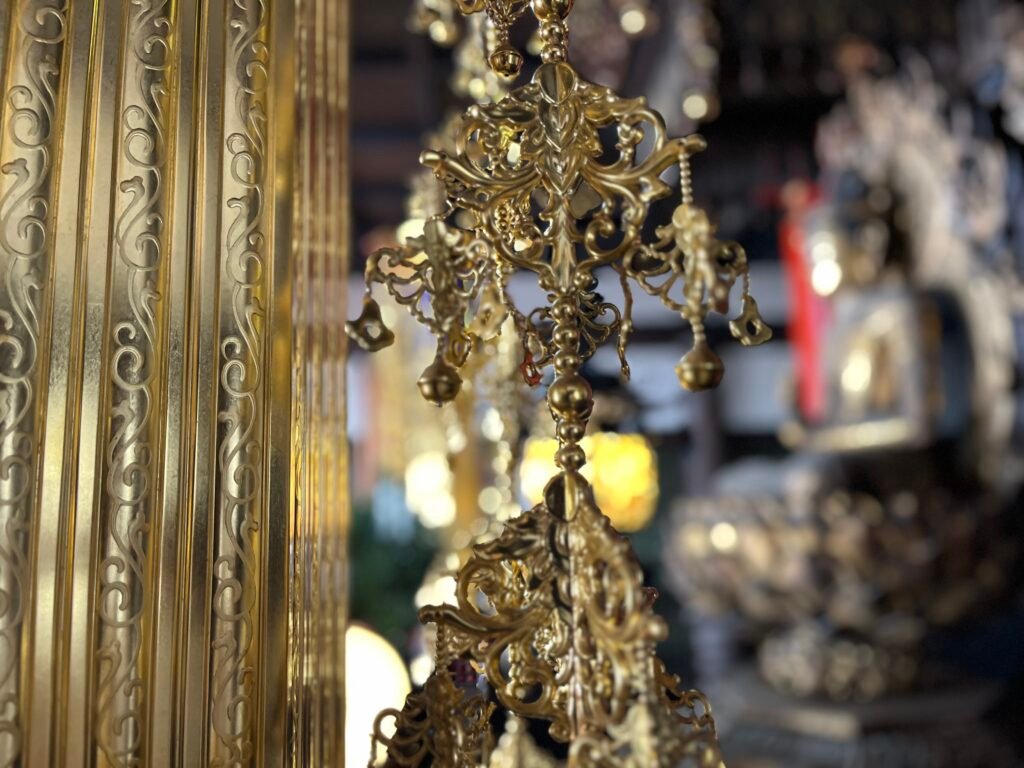
In medieval Japan, influential families often supported particular Buddhist temples, where prayers and memorial ceremonies could be conducted for their ancestors and descendants.
Such a temple was known as an ujidera, or family temple.
Rishō Gokokuji served this role for the Suda clan, a network of local samurai families who held land and influence in the region.
The temple’s official history describes the support it received from local warrior families, including the Ueda family.
According to the priest, much of the area now known as Shimohyōgo once belonged to Rishō Gokokuji.
This brings us to an interesting detail: the name Hyōgo itself.
Historically, the Japanese word hyōgo could refer to a storehouse where weapons were kept.
Could the place name have some connection to the warrior families who once lived and held power here?
Place names often survive long after the societies that gave rise to them have changed.
Even the names we use without a second thought may preserve clues to the lives of people who inhabited these places centuries ago.
Related Story: The Story Behind the Name Hashimoto →
Prayers for the Protection of Japan
Another fascinating aspect of Rishō Gokokuji’s history is its relationship with the imperial court and the Kamakura shogunate.
According to the temple’s official records, during the late thirteenth century, it became a place of prayer under the patronage of the retired Emperor Kameyama.
At the time, Japan faced the threat of invasion by the Mongol Empire.
The Mongol invasions of 1274 and 1281 were among the most significant military crises of medieval Japan.
Religious ceremonies were conducted at temples throughout the country to pray for the defeat of the invading forces and the protection of the nation.
Rishō Gokokuji was among the religious institutions associated with these prayers.
Its relationship with the imperial court continued into later centuries.
The temple’s records describe the devotion of Emperor Chōkei during the period of the Northern and Southern Courts, when Japan was divided between rival imperial lines.
They also record its role in conducting prayers associated with Emperor Go-Kameyama.
Even the name Rishō Gokokuji reflects an important Buddhist ideal.
The words gokoku mean “protection of the country”, referring to the belief that Buddhist prayers and religious practice could help safeguard the nation.
During our walk, local historian Mr. Ooka suggested that the temple’s name may have been inspired by prayers for national protection during the period of the Mongol invasions.
It is a thought-provoking interpretation, connecting the temple’s name with the fears and hopes of the people who lived through that turbulent period.
A Main Hall That Survived the Centuries
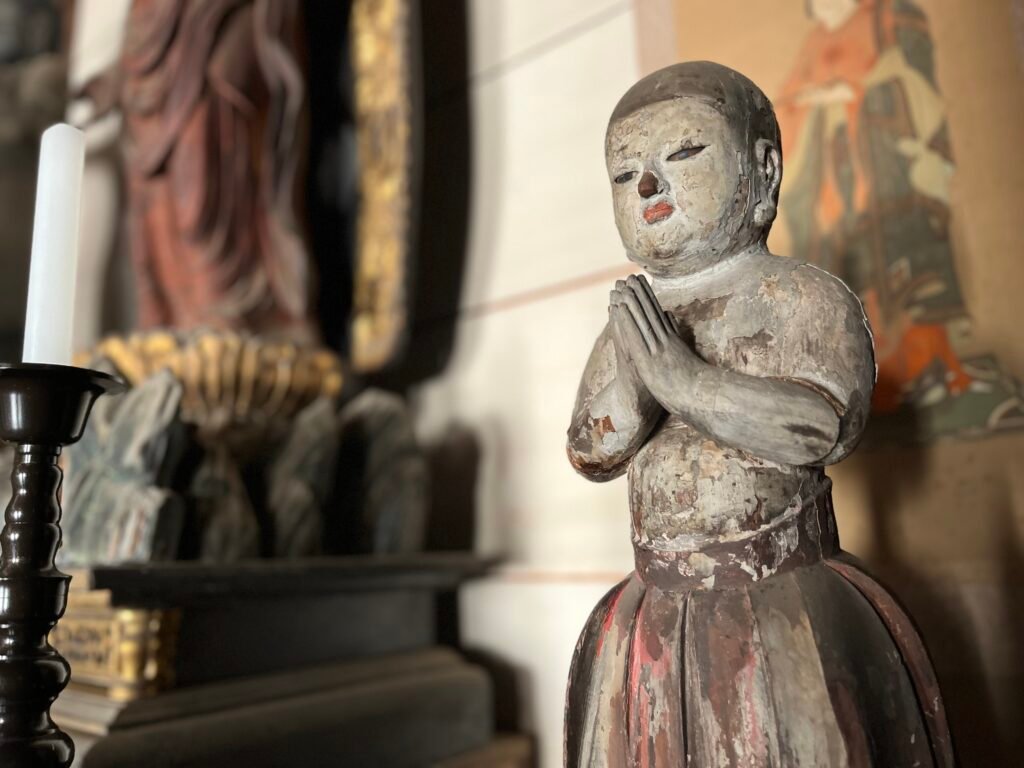
An ancient temple does not necessarily retain the buildings from the time of its founding.
Rishō Gokokuji, too, has experienced the destruction and rebuilding that accompanied Japan’s changing political landscape.
According to the temple’s official history, its buildings were destroyed by fire during the conflicts that followed the beginning of the Kenmu era in the fourteenth century.
The main hall was subsequently rebuilt in the early Muromachi period.
The hall that stands today preserves the architectural traditions of medieval Japanese Buddhism.
On May 29, 1965, it was designated an Important Cultural Property of Japan.
The temple’s official records also describe extensive dismantling and restoration work carried out during 1965 and 1966.
Such restoration involves carefully taking apart a historical building, examining its structure and materials, and reconstructing it while preserving its historical integrity.
The hall we see today has survived not only because of its original craftsmanship but also because generations of people have worked to protect it.
Dainichi Nyorai and the Buddhist Guardian Deities
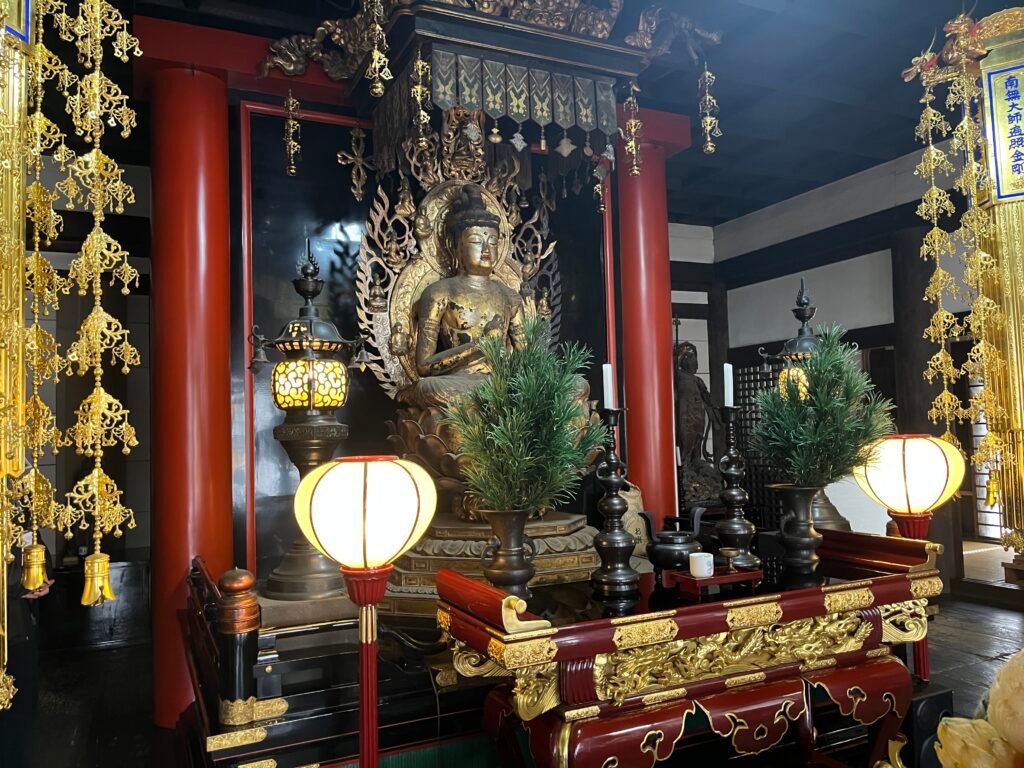
Rishō Gokokuji also preserves important examples of Buddhist sculpture.
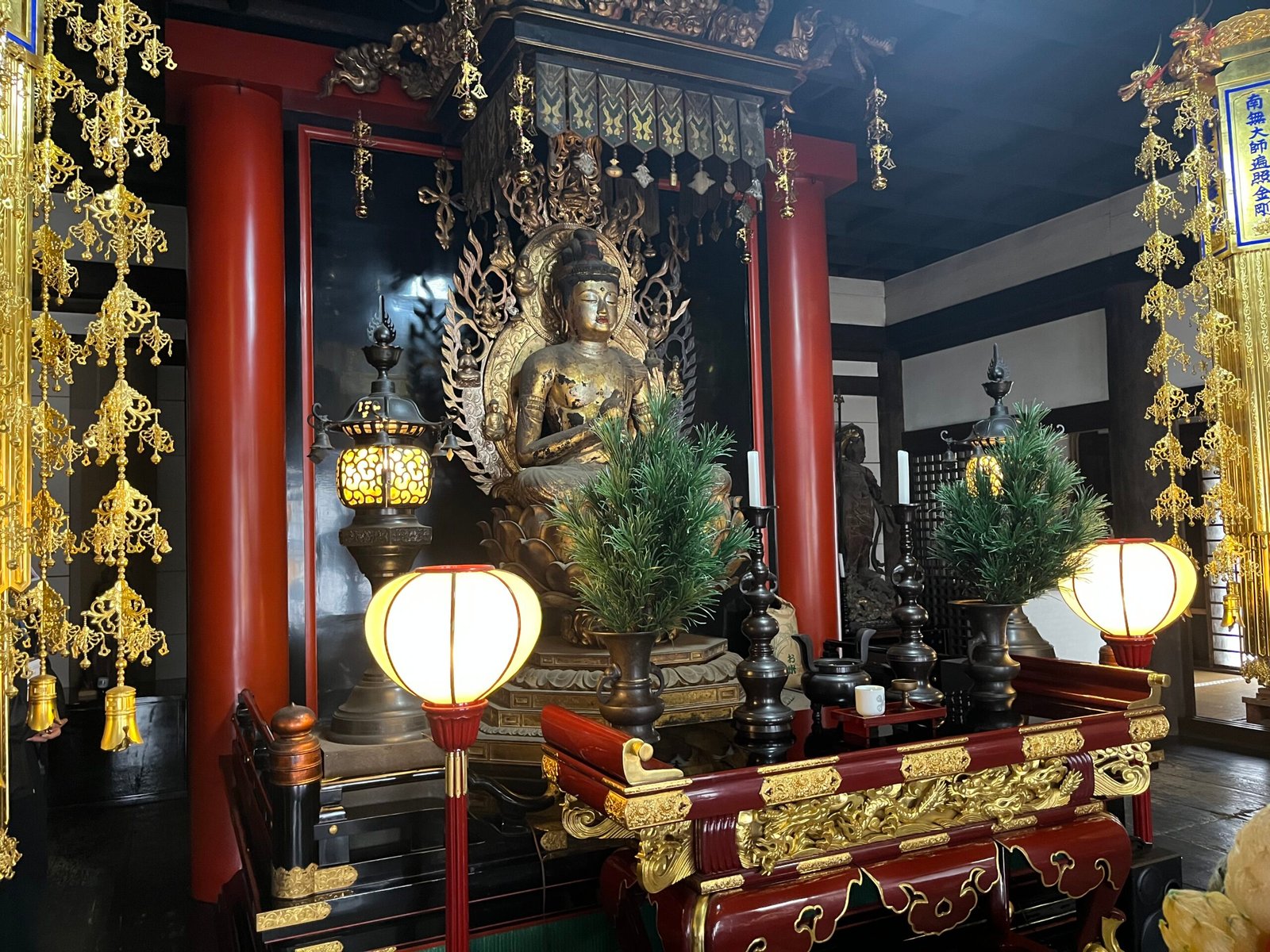
Its principal image is a wooden seated statue of Dainichi Nyorai, known in Sanskrit as Mahāvairocana, or the Great Sun Buddha.
In Shingon esoteric Buddhism, Dainichi represents the fundamental truth of the universe and occupies a central position in Buddhist teaching.
One striking detail of the statue is the distinctive arrangement of its hands and fingers.
To someone unfamiliar with Buddhist iconography, the gesture might resemble the hand signs often associated with ninjas in Japanese popular culture.
In Buddhism, these symbolic hand gestures are called mudras. Each carries a particular religious meaning.
Understanding even a small detail like this can change the way we look at a Buddhist image.
The temple’s official materials also introduce a statue of Jikokuten, one of the Four Heavenly Kings.
These four guardian deities are believed to protect the Buddhist teachings and the four cardinal directions.
Jikokuten is the guardian of the east.
Learning about the figures enshrined within a temple offers another way to understand the beliefs and traditions that have been preserved there.
A Reminder at the Temple Entrance
There was something else that stayed with us from our visit.
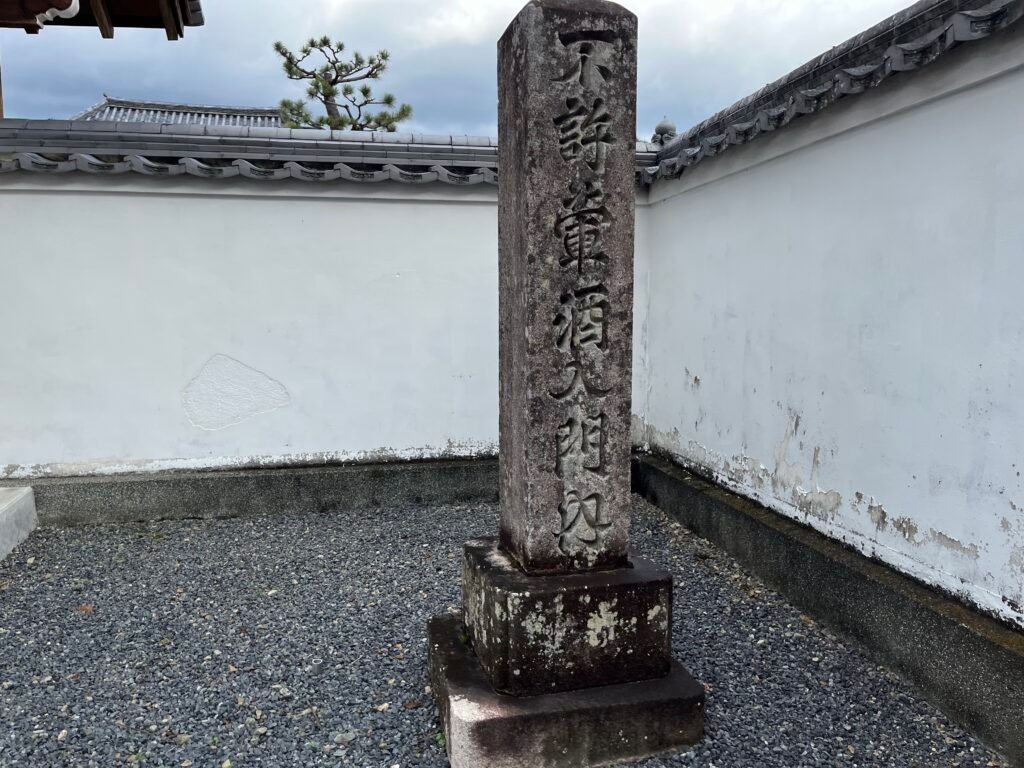
Near the temple entrance stood a stone monument bearing words of religious discipline.
Japanese Buddhist temples sometimes display the expression Fukyo Kunshu Nyū Sanmon, traditionally written as 不許葷酒入山門.
The phrase prohibits the bringing of alcohol and certain strongly scented foods into the sacred temple precincts.
Such restrictions reflect the importance traditionally placed on discipline and restraint in Buddhist religious life.
Shingon Risshū, the tradition to which Rishō Gokokuji belongs, has long placed particular emphasis on the observance of Buddhist precepts.
The priest spoke in a quiet, unpretentious manner, explaining the temple’s history with patience and sincerity.
There was something about his straightforward presence that seemed to echo the values expressed by the stone monument.
It brought a sense of quiet respect for the religious traditions that have been maintained here for generations.
The Pine Tree Where Hideyoshi Tied His Horse
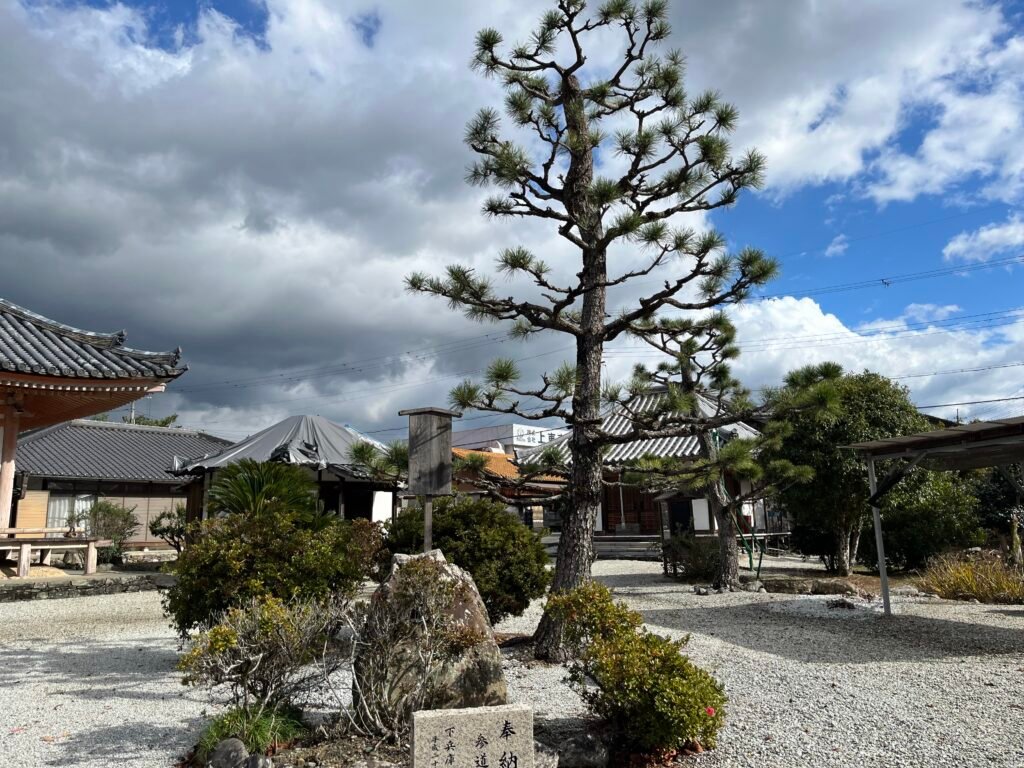
Within the temple grounds stands a pine tree associated with one of the most influential figures in Japanese history.
It is known as the Taikō Koma-tsunagi no Matsu, or the pine tree where the Taikō tied his horse.
Taikō is a title associated with Toyotomi Hideyoshi, the powerful military ruler who helped bring Japan’s long period of civil warfare towards an end in the late sixteenth century.
According to temple tradition, Hideyoshi visited Mount Kōya in March 1594 and stopped at Rishō Gokokuji on his return journey.
The priest explained that Hideyoshi had travelled to Mount Kōya for memorial observances connected with the third anniversary of his mother’s death.
During his visit to the temple, he is said to have tied his horse to a pine tree in the grounds.
The story has been passed down through generations and remains part of the temple’s identity today.
Note: The pine tree standing here today is not the original tree from Hideyoshi’s time. It is said to be the third-generation tree.
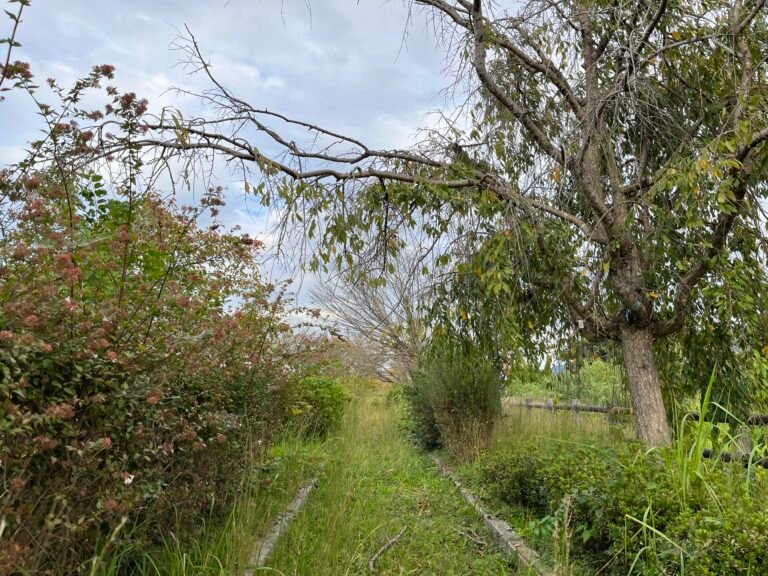
Beyond the Temple: Walking Through Kuragari Pass
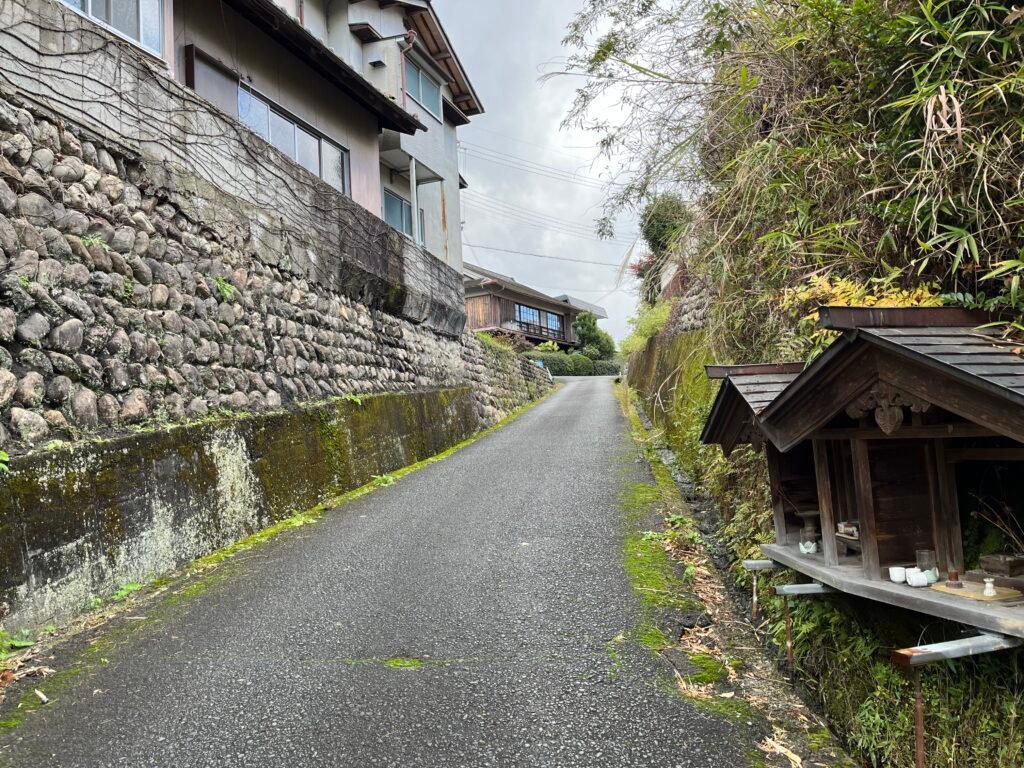
After visiting Rishō Gokokuji, we continued through Suda with local historian Mr. Ooka.
One of the places he introduced was Kuragari-tōge, an unusual pass along an old road once used by travellers, including pilgrims making their way towards Ise Grand Shrine.
In Japan, a tōge, or mountain pass, usually refers to a route that climbs towards a high point before descending on the other side.
Kuragari is different.
Here, the road first descends into a hollow before climbing again.
The name is intriguing, too.
In everyday Japanese, kuragari means darkness, suggesting a place shaded by thick trees.
But Mr. Ooka offered another interpretation.
He suggested that the name Kuragari might have originated from a phrase meaning “a horse’s saddle rolling or tumbling over.”
In Japanese, kura means a saddle, while korogari means “to roll or tumble.” He believes that the original expression may have gradually changed in pronunciation over time, eventually becoming Kuragari.
The unusual terrain, where the road descends into a hollow before climbing again, may once have made travelling with horses particularly difficult.
Although this remains a local historian’s interpretation rather than an established etymology, it offers an intriguing glimpse into how people might once have experienced this road.
There is another story associated with Kuragari.
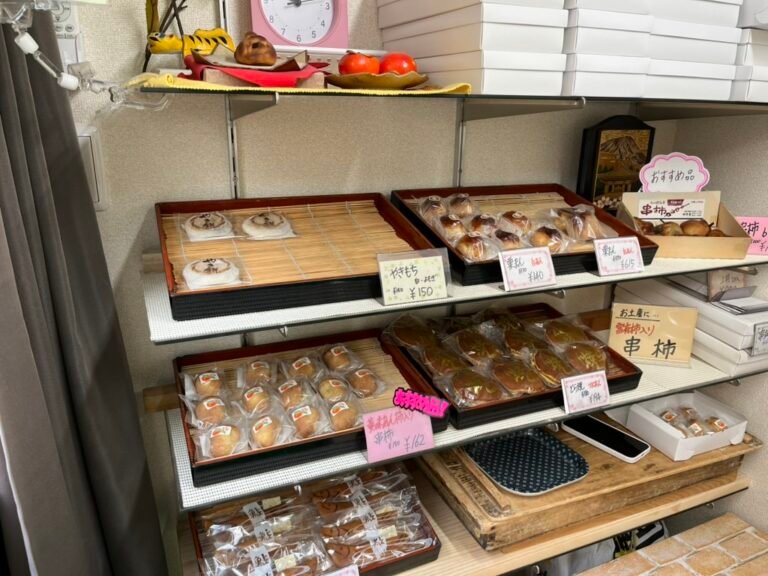
Historical accounts describe a small teahouse known as Kuragari Manjūya, where travellers could stop for something sweet.
Its speciality was meoto manjū, a traditional Japanese confection.
Manjū are small cakes or buns, commonly filled with sweet bean paste. The word meoto means husband and wife, suggesting a pair.
An old verse describes pilgrims travelling to Ise, reaching into their purses to buy the famous local sweets.
The verse even praises Kuragari’s meoto manjū above Ubagamochi, a well-known traditional sweet from Kusatsu in present-day Shiga Prefecture.
It is a small glimpse into the everyday life of the old road.
Long before modern cafés and convenience stores, travellers stopped to rest, buy sweets, and perhaps exchange stories with the people they met along the way.
Seeing Suda Area Differently
A temple, a pine tree, an old place name, and a sweets shop that has long since disappeared.
At first, these may seem like unrelated fragments of history.
Yet together they reveal how deeply religion, political authority, local communities, and travel were once connected.
Rishō Gokokuji preserves the history of Buddhist monks, the warrior families who supported them, and the people who prayed for the protection of their country.
Kuragari Pass tells a different story, one of ordinary travellers moving along roads that connected distant places.
Both histories are easy to overlook when passing through the landscape today.
Listening to the priest and walking with Mr. Ooka gave us a new appreciation of the stories that remain hidden in these familiar surroundings.
The more we learn about a place, the more there is to see.
And Suda, it seems, still has many stories waiting to be discovered.
Sometimes, understanding a place begins by listening to the stories that have been passed down there.
Visitor Information
Rishō Gokokuji Temple (利生護国寺)
A historic Shingon Risshū Buddhist temple in the Suda district of Hashimoto, Wakayama Prefecture.
Address
732 Shimohyōgo, Suda-chō, Hashimoto, Wakayama 648-0016, Japan
Admission
- Temple grounds: Free
- Main Hall interior: ¥300 per person
Opening Hours
Main Hall interior viewing is generally listed as 9:00 AM–5:00 PM. Please confirm availability before visiting.
Access by Train
Take the JR Wakayama Line to Shimo-Hyōgo Station. The temple is approximately a 5–10 minute walk from the station.
Access by Bus
Nankai Bus services from the Hashimoto Station area to the Ōdera bus stop are listed in the temple’s printed guide. Check the current route and timetable before travelling.
By Car
Approximately 10 minutes from Hashimoto IC or Hashimoto-Higashi IC on the Keinawa Expressway. Free parking is available.
Before You Visit
Advance arrangements may be required to view the interior of the Main Hall and its Buddhist statues. We recommend contacting the temple before your visit.
Photography Note
Photographs taken inside Rishō Gokokuji Temple and of its Buddhist statues were taken with the temple’s permission.
Visitors wishing to take photographs should seek permission in advance.
View Rishō Gokokuji on Google Maps
Related Posts
 Obanzai Kate — Homemade Japanese Comfort Food Bento, Food, Hashimoto, Hashimoto Station, Japanese Food, Local Restaurant, Lunch, Nankai Railway A welcoming little restaurant near Hashimoto Station, where homemade obanzai, colorful bento… ...
 A Field of Scarecrows, and a Touch of the Unexpected Autumn, Hashimoto, Local Stories A wonderfully surreal gathering of handmade scarecrows along Hashimoto's riverside, set against… ...