Hashimoto City,
Where Our Journey Begun
Some places become home long before we realise we have chosen them.
HASHIMOTO, WAKAYAMA · 15 MIN READ
A Place That Rarely Asks for Attention
There are places that announce themselves before you arrive. Their names come with an image already attached: a gate, a skyline, a celebrated view. You reach them carrying other people’s expectations, and the journey can become an exercise in recognition. You look for the scene you have already seen.
Hashimoto is different.
At the north-eastern edge of Wakayama Prefecture, where the land gathers around the Kinokawa River and rises towards wooded mountains, the town rarely asks for attention. It does not present itself as a single spectacle. It arrives in pieces: the brief chime of a level crossing; the broad light above the river; persimmon trees ordered along a slope; tiled roofs seen from a quiet street; the sound of a train receding until the town’s smaller noises return.
Nothing insists on being photographed.
Nothing tells you, immediately, what it means.
This can be disorienting. Modern travel has trained us to look for proof that we have arrived. A famous object gives the day a centre. A list gives it momentum. Without either, we may feel that nothing is happening.
But remain here a little longer and another possibility appears: perhaps arrival is not a moment at all. Perhaps it is a gradual adjustment of attention.
Walk without trying to complete the town. Notice how quickly the station gives way to ordinary streets. Notice the river not as a scenic backdrop, but as a presence that has determined routes, work and settlement for centuries. Notice the shops whose value lies less in novelty than in continuity. Hashimoto begins to reveal itself when we stop asking it to perform.
This is not a town empty of stories. It is a town whose stories sit close to daily life. Roads still follow old directions. The name of the place preserves the memory of a bridge that vanished more than four centuries ago. Materials woven here travel far beyond the city, even when the place that made them remains unknown. Fruit ripens according to a calendar older than tourism. Beneath the apparent quiet is a long history of movement.
To understand Hashimoto, then, we should begin not with a landmark but with a pace.
Slow enough to see what connects.
The River Before the Map
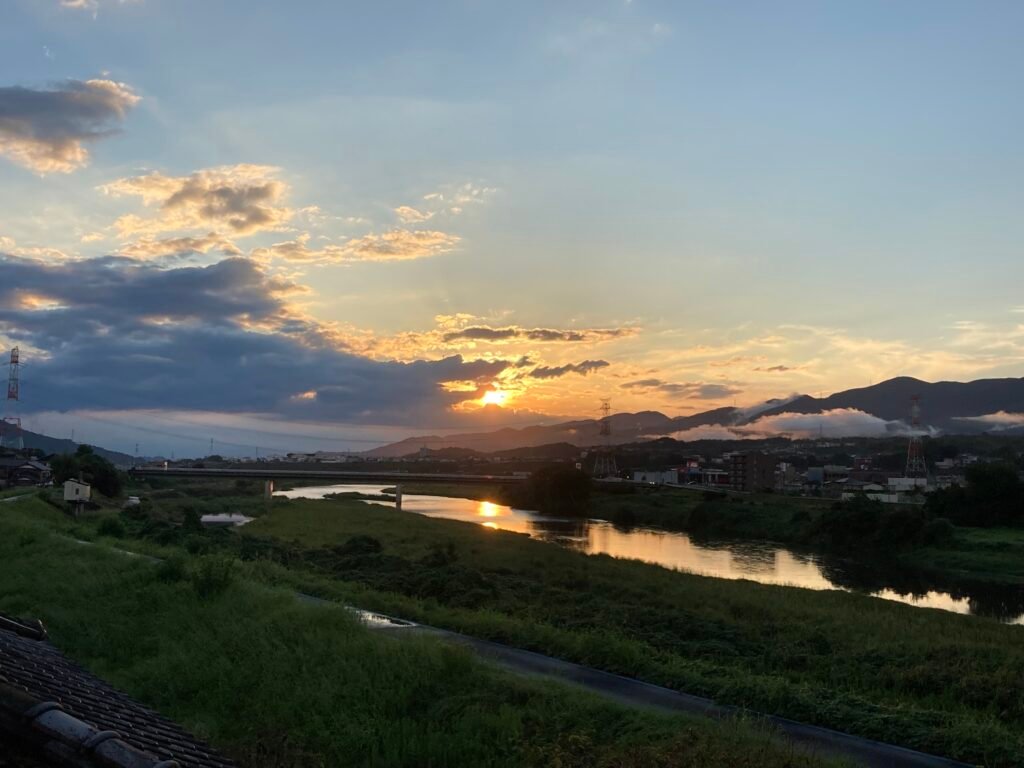
The Kinokawa River does not need to be dramatic to shape the town. It moves across the landscape with the authority of something that was here before the streets and will outlast their present arrangements. From a bridge or embankment, its width creates distance: between one bank and the other, between the close detail of the town and the larger geography to which it belongs.
Rivers are often described as boundaries, but they are also routes. Historical records of the region describe riverboats carrying goods such as salt and rice between Hashimoto and Wakayama. The water joined local life to a wider economy, while crossings gathered people at particular points. To live beside the Kinokawa was to live with both connection and uncertainty. Water could carry, nourish and open a town; it could also rise and take away what had been built.
That tension lies inside Hashimoto’s name.
In 1585, the monk known as Mokujiki Ōgo developed a settlement on land that formed part of Kosada village, establishing lodging for travellers on the route through the area. Two years later, in 1587, he built a bridge across the Kinokawa for their convenience. Municipal records give its length as 130 *ken*—approximately 236 metres. The bridge survived for only three years before a flood swept it away.
The structure disappeared. Its meaning did not.
“Hashimoto” is generally understood here as the place at the base of the bridge. The name remained after timber and stone were gone, turning an absent object into a permanent address. It is difficult to imagine a more fitting beginning for the town: an act of connection, vulnerable to the river, remembered through language.
Ōgo’s work was not limited to the crossing. He opened the town as a lodging place and secured permission from Toyotomi Hideyoshi in 1587 to establish a salt market. In 1594, the market received exemption from various taxes, a privilege that continued into the Edo period and supported Hashimoto’s growth. He was also associated with improving agricultural reservoirs in the area—an equally important kind of infrastructure, quieter than a bridge but essential to the fields it supplied.
History tends to preserve the names of founders and rulers. Yet a town is made real by many unnamed acts: carrying goods from a boat, preparing a room for a traveller, maintaining a channel, bargaining over salt, repairing a road after rain. The facts of Hashimoto’s origin point beyond one biography. They show a settlement growing because passage, water and work were brought into relationship.
Stand beside the river now and the sixteenth century does not become visible in any theatrical way. There is no need for it to. The present landscape is enough. Trains and cars have replaced much of the old traffic; bridges span the water again. Still, the same question remains beneath the modern surface: how do people cross, meet and continue?
Hashimoto was shaped by its answer.
Where Roads Become Encounters
Long before travel became an industry, this was a place of movement.
The north–south Kōya Kaido routes met an east–west road known as the Ise or Yamato Kaido road in the Hashimoto area. Together with traffic on the Kinokawa River, these routes made the town a point of passage and exchange. Koyasan Pilgrims, merchants, labourers and local residents did not move for the same reasons, but the road placed them briefly in one another’s world.
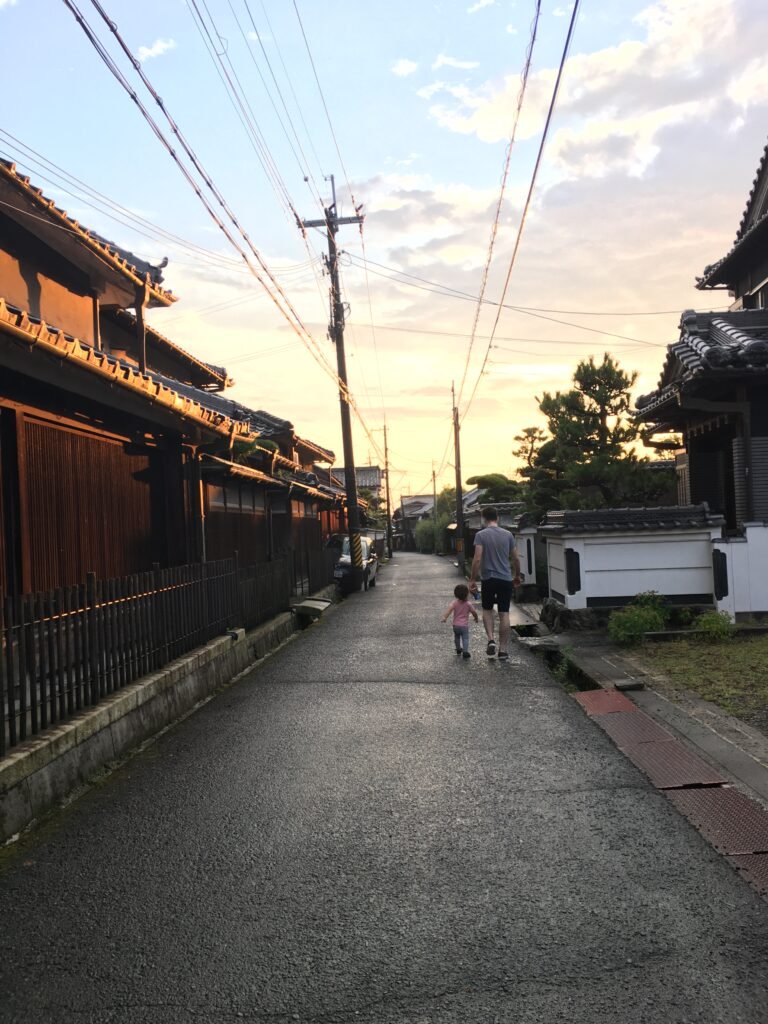
We often imagine an old road as a line drawn neatly across a map. On foot, it is something else: a sequence of surfaces, inclines, pauses and decisions. It passes houses and fields. It narrows, bends and becomes an ordinary street. Its history is not separate from the neighbourhood; it is embedded within it.
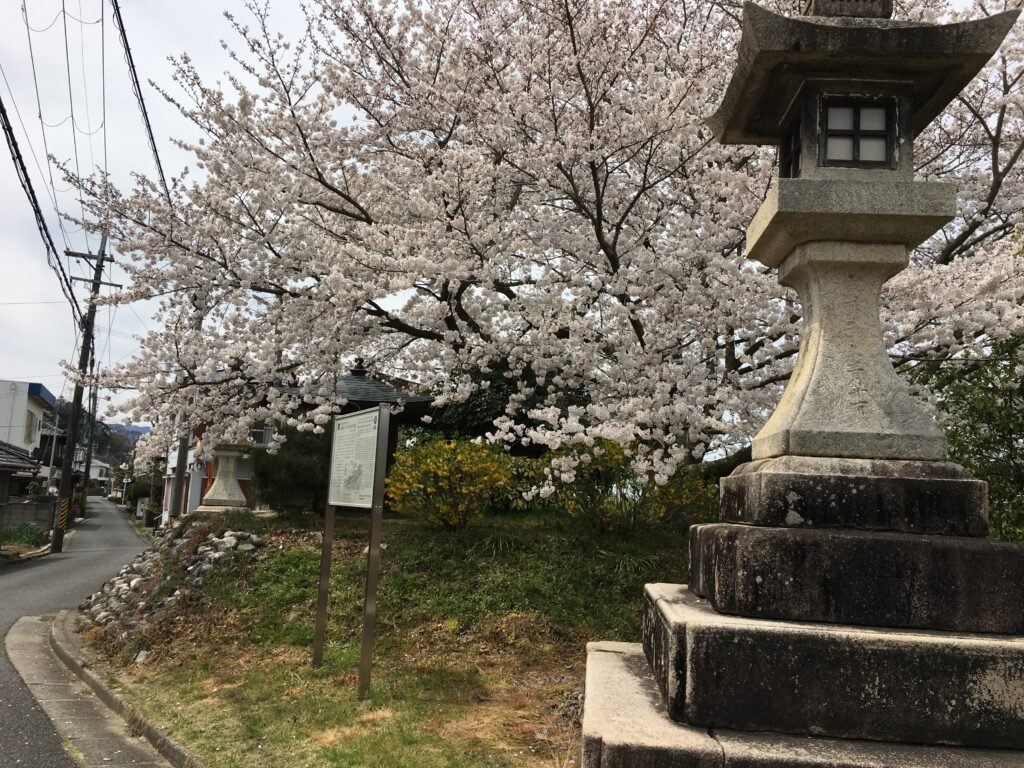
One remnant makes this history tangible. After Ōgo’s bridge was lost, travellers crossed the river by boat. On the north bank, a large stone lantern marked the Tōge ferry landing. Erected in 1814, it was funded by a strikingly broad network that included indigo merchants from Awa, merchants from Kyoto, Naniwa and Sakai, Wakayama riverboat groups, religious associations and worshippers. The names carved into its base record more than devotion. They describe a town connected through people who arrived from elsewhere and needed one another to move onward.
Walking at the Speed of a Town
The Texture of Work

If roads explain how Hashimoto connected with other places, making explains how the city gave something back.
In Kōyaguchi, pile textiles have been produced since the Meiji era. Pile fabric carries an extra dimension: yarn rises from its base to create a soft or textured surface. The material appears in forms as different as faux fur and railway seating. Hashimoto City describes the area as Japan’s leading producer. The claim matters, but the more revealing thought is this: countless people may have touched something made in Hashimoto without knowing its origin.
This is a different kind of visibility. A celebrated destination is recognised from afar; a manufacturing town may be present everywhere while its name remains quiet. The material leaves, enters another product, and becomes part of another person’s daily world.
Textile production also offers a way to read the town itself. A fabric is made through structure and surface. The supporting ground may be almost invisible, yet everything depends on it. Hashimoto’s celebrated and ordinary histories are similarly interwoven: the founder and the ferry worker, the merchant and the grower, the old road and the school route, the object sent elsewhere and the hands that stayed.
The city is also known for Kishu *hera* fishing rods, a tradition extending over a century and designated a national traditional craft in 2013. The rods are valued for a specialised practice, but their wider lesson is accessible.

Skill accumulates through repetition, correction and transmission. An object carries decisions that may be invisible to anyone who has not learned to look.
Visitors often want to meet a craft through a finished product. The deeper encounter begins with process: why this material, why this pressure, why this sequence, why does one step have to wait? These questions return dignity to labour. They move us away from shopping as acquisition and towards understanding as attention.
The same care should guide any visit to a working place. A workshop is not a stage, and an artisan is not an exhibit. Permission matters. Time matters. If a maker chooses to explain, listening is the first exchange. Purchasing something can support continuity, but so can remembering and naming where it came from.
In Hashimoto, texture is more than a quality of cloth or bamboo. It is a quality of place. The city rewards the hand that does not skim its surface.
A Calendar Written in Fruit

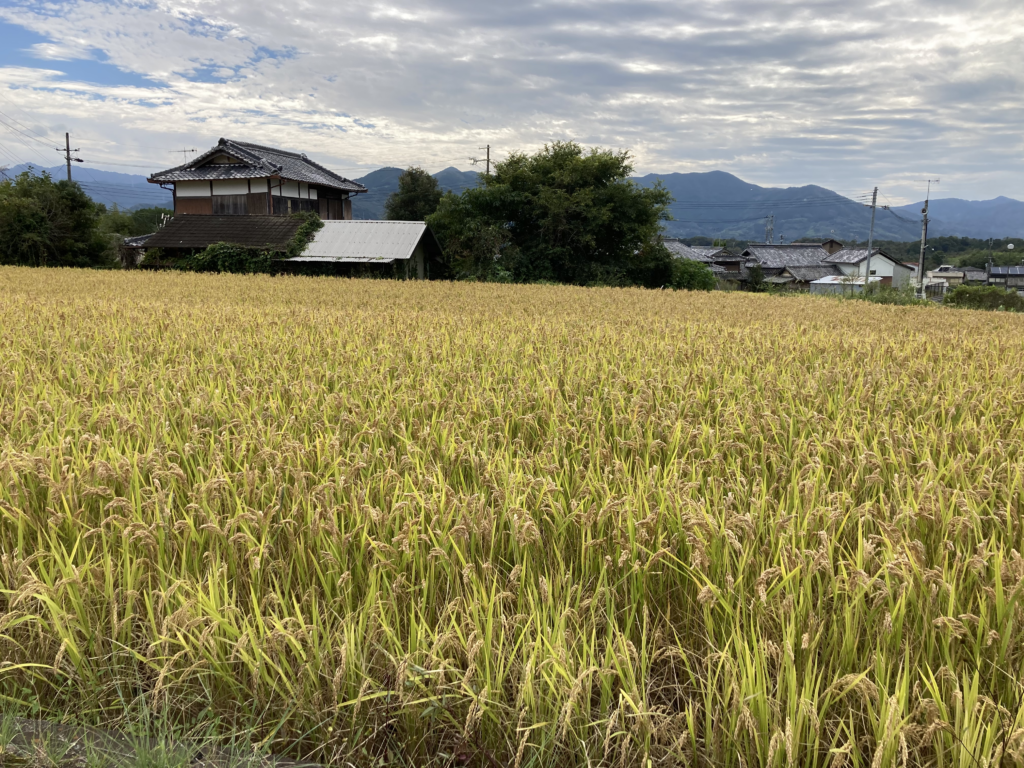
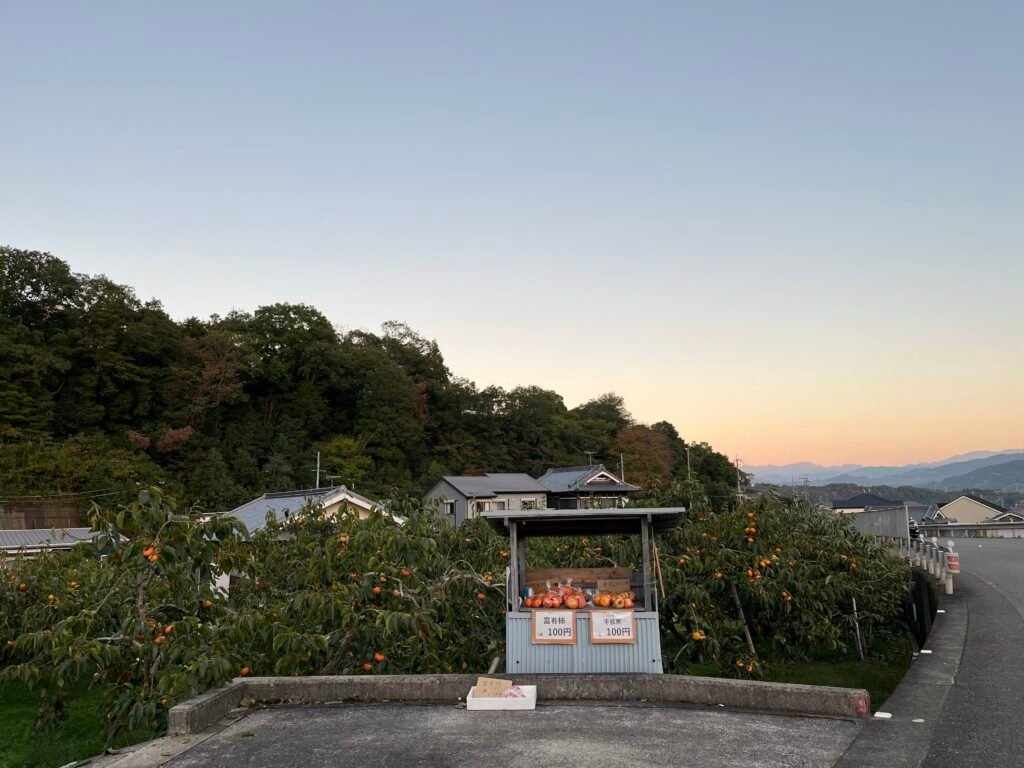
A season is not a backdrop. It is a sequence of work.
History That Still Breathes
History is often presented behind glass, separated from the pace of a weekday. In Hashimoto, its most persuasive form is continuity.
The old routes still enter contemporary streets. The river remains both landscape and system. A stone lantern survives as evidence of a ferry crossing, even though the crossing itself belongs to another era. Pile fabric evolves into modern uses. Bamboo becomes an exacting tool through knowledge passed forward. Reservoirs associated with sixteenth-century improvements still belong to the agricultural geography of the city.
Continuity is not the same as preservation without change. Every tradition survives by adapting: to new markets, altered transport, different households, climate and the ambitions of younger generations. What looks stable from the outside may require constant negotiation within.
That negotiation deserves a place in travel writing. Too often, we describe rural or historic places as though their purpose were to reassure visitors that another time still exists. This is unfair to the people who live there.
- Stay longer.
- Buy from people who make and grow here.
- Ask before photographing.
- Leave enough room in the day for a recommendation to alter it.
08
Learning to Notice
By late afternoon, the light begins to collect on surfaces that seemed ordinary in the morning. Roof tiles hold it differently from river water. An orchard turns warmer at its edges. Shadows clarify the shape of a lane.
Nothing new has been added. The change is partly in us.
This is what Hashimoto teaches without announcing a lesson: attention is not passive. It is a way of travelling, and like any practice, it becomes more precise with use.
Begin with sound. The interval between trains. Water after rain. A shop greeting. Wind moving through dry leaves. Then look for thresholds: where the station becomes the neighbourhood, where a road bends towards the river, where cultivated land meets the mountain, where an old material enters a contemporary object.
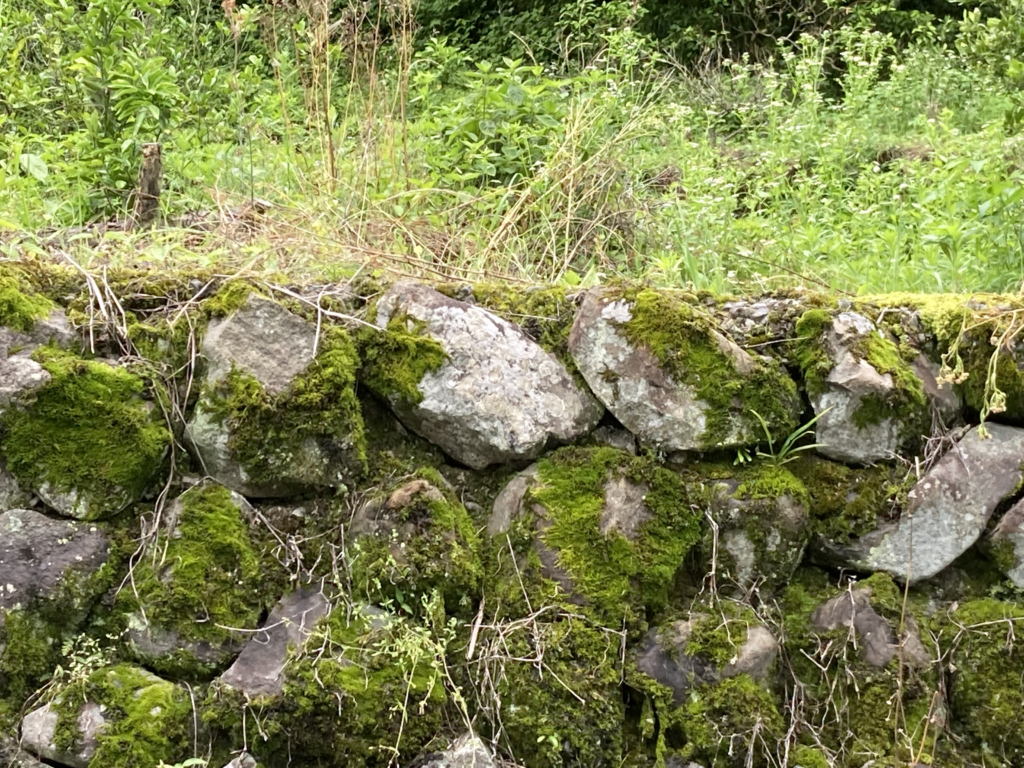
Notice repetitions. Lanterns. Stone walls. Persimmon branches. The colour of earth. The line of a railway. Repetition turns separate observations into a vocabulary.
Finally, notice what you cannot know from looking. The names of techniques. The labour behind a harvest. The reason a street follows its particular course. The memory attached to an unremarkable building. Curiosity becomes most honest when it recognises its limits.
This is where a guide can do more than provide directions. A useful guide does not replace discovery; it prepares the traveller to discover with care. It connects a view to its history, an object to its maker, a season to its work. It tells you when to pause, what not to interrupt, and which details are easy to miss. It turns information into a more respectful encounter.
The best local knowledge does not make a place smaller by explaining everything. It makes the place larger by showing how much remains.
Hashimoto can be visited in a day. It cannot be completed in one.
A practice of attention
- Sound
- Thresholds
- Repetitions
- What cannot be known
The Hashimoto Field Guide
A considered route through the river, old roads, makers and seasonal tastes—designed to help you visit with time and care.
Before the Journey Continues
Some travellers will continue from here towards Koyasan. The old routes make that direction part of Hashimoto’s history, and the modern railway still carries people onward. But onward is not the same as more important.
Before the mountain, there is the river.
Before arrival, there are crossings.
Before the destination, there is a town that has spent centuries receiving movement and turning it into life.
Hashimoto does not need to compete for grandeur. Its value lies elsewhere: in the absent bridge that remains in a name; in the old road folded into an ordinary street; in cloth whose origin may be softer than its reputation; in bamboo shaped by trained hands; in fruit that makes a year visible; in the daily patience required to keep any place alive.
These things do not ask to be consumed quickly. They ask for time, context and a willingness to notice.
When you leave, you may not carry a single defining image. You may carry a sequence instead: morning light over the Kinokawa, the texture of a woven surface, a persimmon tree on a slope, a conversation in which the pauses mattered as much as the words. The memory will feel less like a trophy than a relationship begun.
That is enough.
Every memorable journey begins long before the destination. Some begin with a road. Others begin with a conversation.
In Hashimoto, the journey begins when we slow down long enough to understand where we are.
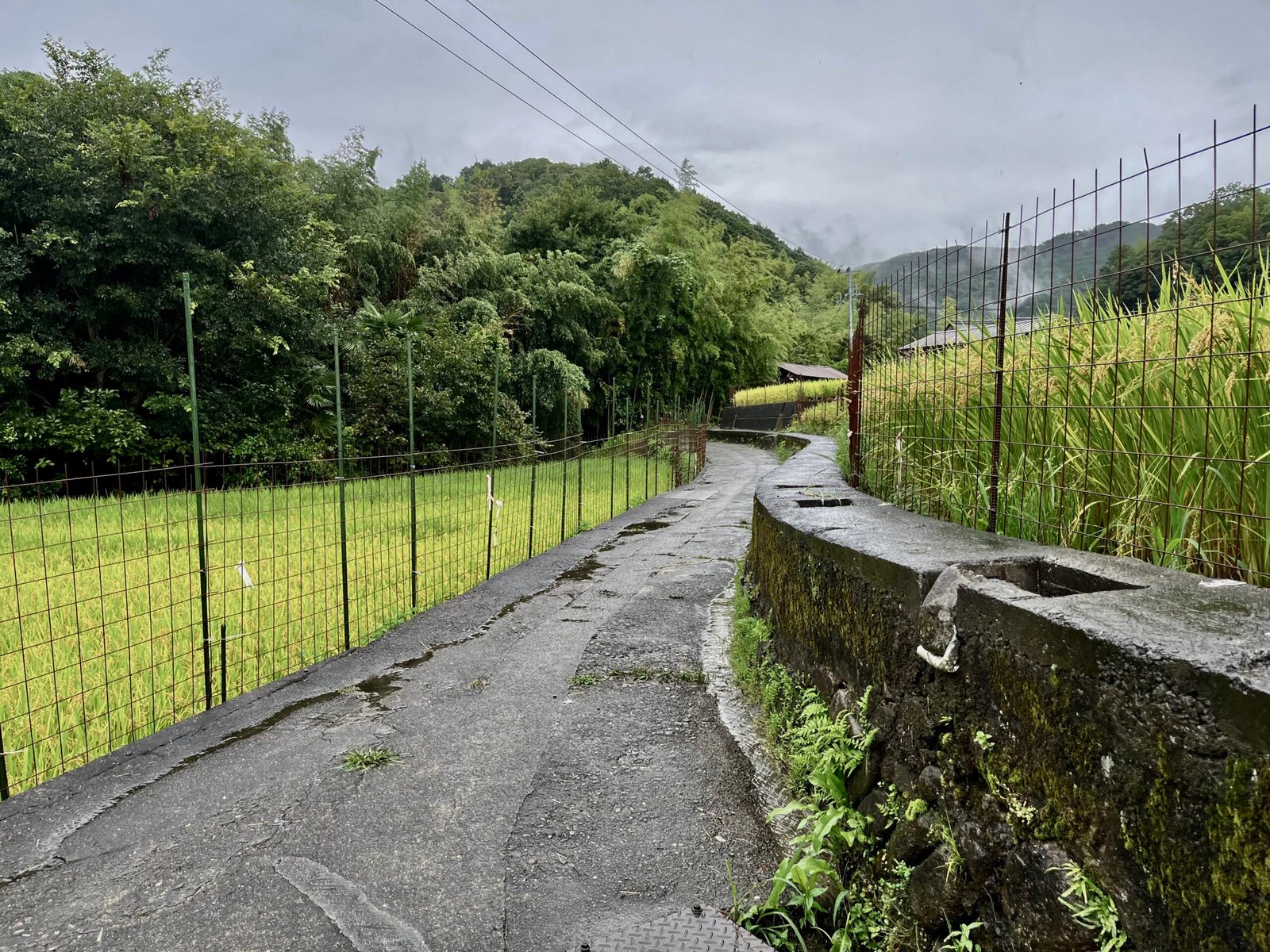
For YUI Studio, that beginning is here.
This is not a town that asks for your attention.
It is simply a place where journeys begin, where people return, and where they quietly gather themselves before moving on.
Like the unseen foundations of a bridge reaching toward the land, Hashimoto asks for no recognition.
It does not seek admiration. It simply continues to support the countless journeys that pass through it, quietly and without expectation.
We believe that a journey beginning here offers more than a destination.
Along the way, the landscapes, the people, and the unexpected encounters become part of the journey itself—often carrying far greater meaning than we could have imagined.
This is why we created YUI Studio: to share the stories of a town that has quietly shaped countless journeys, without ever asking to stand at the centre of them.
If this journal encourages even a few travellers to slow down, to look more closely, and to discover Hashimoto before moving on, then it has already fulfilled its purpose.