The Story Behind the Name Hashimoto
When we travel somewhere unfamiliar, a town’s name often reaches us first as a sound.
We hear it in a station announcement. Find it on a map. Notice it as a stop along a route in a guidebook. Try out its pronunciation as we tell someone where we are going.
We can reach a place without knowing what its name means.
Yet once we learn its meaning, the same place can begin to look a little different.
Hashimoto. In Japanese, 橋本.
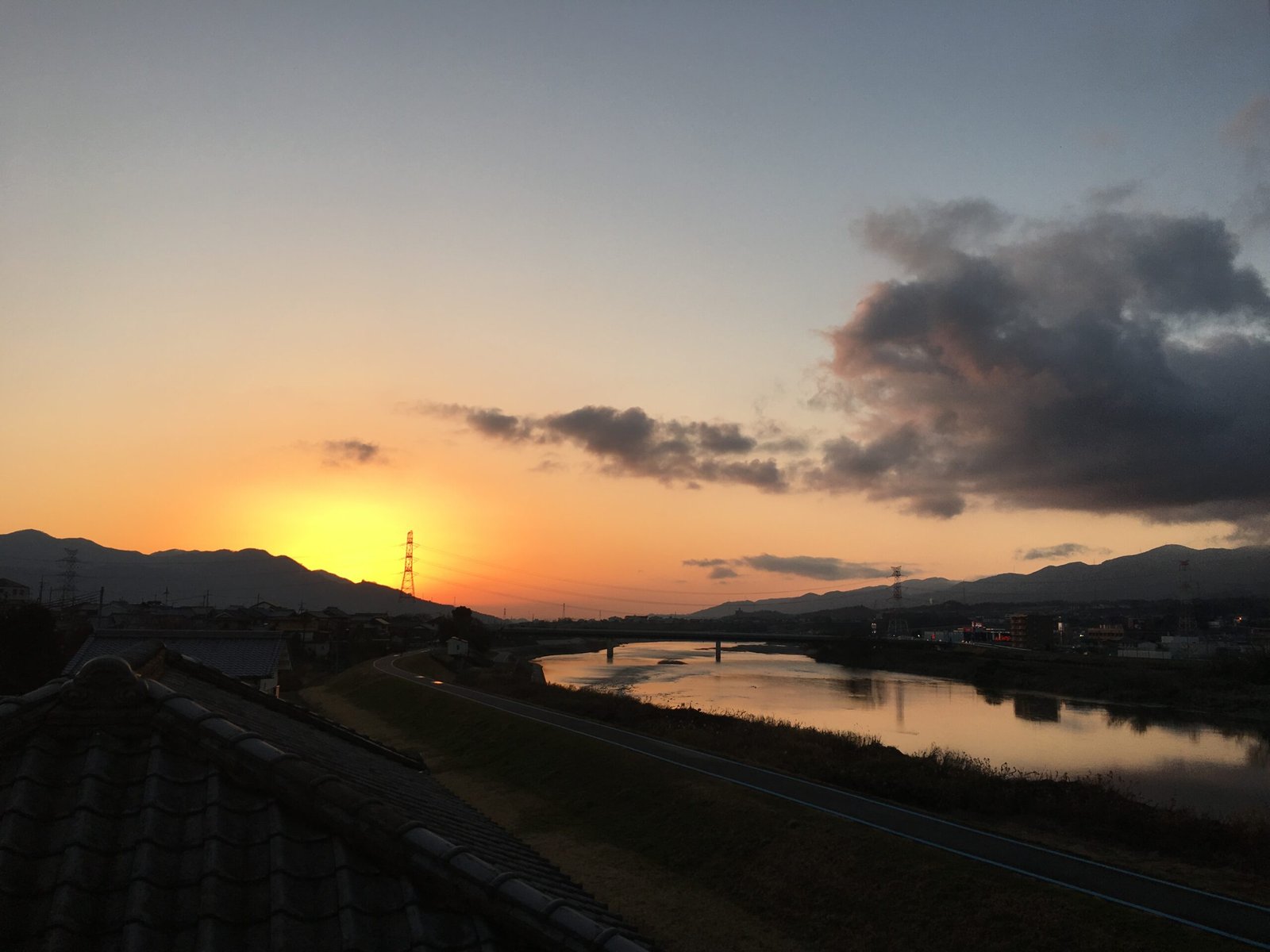
Hashimoto lies in northeastern Wakayama Prefecture, south of Osaka. The Kino River flows through the town, its broad, open banks offering a welcome sense of calm.
The Japanese characters known as kanji carry meaning as well as sound.
In this name, 橋—hashi—means “bridge.” 本—moto—can be understood here as its base: the place where a bridge meets the bank.
Together, the characters evoke a simple scene.
A place at the foot of a bridge.
Local tradition traces the name to a bridge built across the Kino River more than four hundred years ago.
That bridge is no longer there.
Its name, however, lives on: at the station, in addresses and school names, on maps, and in the words of people passing through.
The story of Hashimoto begins with this small wonder.
A Town That Began with a Bridge
To understand how this town came to be, we must first look beyond the river, toward the place that drew people into the mountains.
Koyasan.
Sometimes called “Mount Koya” in English, Koyasan does not refer to a single mountain peak. It is a place of faith, a community of temples set within a high basin surrounded by mountains. The name belongs to this whole landscape of religious life. (1)
In the ninth century, the Buddhist monk Kūkai established a place of spiritual practice here.
The tradition he taught, Shingon Esoteric Buddhism, seeks to realize Buddhist wisdom through practices including sacred words, rituals, and meditation. Over the centuries, Koyasan became both a center for monks studying and practicing these teachings and a destination for people coming to offer prayers. (2, 3)
For pilgrims who had traveled long distances overland, the ascent into these sacred mountains marked a final stage of their journey.
Hashimoto stood along that approach.
Several paths connected the surrounding region with Koyasan. The Kuroko-michi led from Hashimoto through the mountains, while the Kyo-Osaka-michi brought travelers from the Kyoto and Osaka areas through what is now Hashimoto.
These were sankeidō: routes followed by people visiting temples and other sacred places to pray. They were paths along which pilgrims drew closer to their destination, step by step. (1)
Before entering the mountains, travelers needed somewhere to pause and prepare.
Hashimoto was one of the lodging towns that supported these ordinary necessities near the end of a spiritual journey: a meal, a bed, a little time to recover.
But before those heading south could continue toward Koyasan, there was the Kino River to cross.
A route that looks continuous on a map can end abruptly at the water’s edge. Seeing the opposite bank does not mean being able to reach it.
The Kino River was a waterway for carrying goods. For travelers heading toward Koyasan, it was also a crossing they had to make.
In the late sixteenth century, a monk from Koyasan helped shape the town here. His name was Mokujiki Ōgo.
“Mokujiki” refers to an ascetic practice of restricting one’s diet as part of religious discipline. According to Hashimoto City’s account, Ōgo wore simple clothing and ate only fruit and vegetables during his training. This was an expression of spiritual discipline rather than a dietary preference in the modern sense. (4)
Alongside his religious practice, Ōgo devoted himself to work that supported people’s daily lives. He helped establish a town below Koyasan and contributed to the development of ponds that supplied water to farmland.
The religious life of the mountains and the everyday life of the communities below: his work reached into both. He became an important figure in the history of Koyasan and Hashimoto alike. (5)
The city’s account dates the founding of the town to 1585, when Ōgo opened land for a settlement where travelers to and from Koyasan could stay.
In 1587, he is said to have built a bridge across the Kino River to ease their passage.
It is this bridge that local tradition connects to the name Hashimoto. (5)
The Bridge Was Lost. The Name Remained.
The story of Ōgo’s bridge reaches us through the tradition preserved in the city’s account. It is in that spirit—as a story handed down about the town’s beginnings—that we follow it here.
According to this account, the bridge was washed away when the river rose, approximately three years after its construction.
Yet the need to cross the Kino River remained.
Ferry crossings continued the work of the bridge. These boats carried people between the two banks, keeping the route open across the water. (6)
There were journeys of faith to continue, goods to move, and lives being lived on both sides.
The means of crossing changed. The life of the town went on.
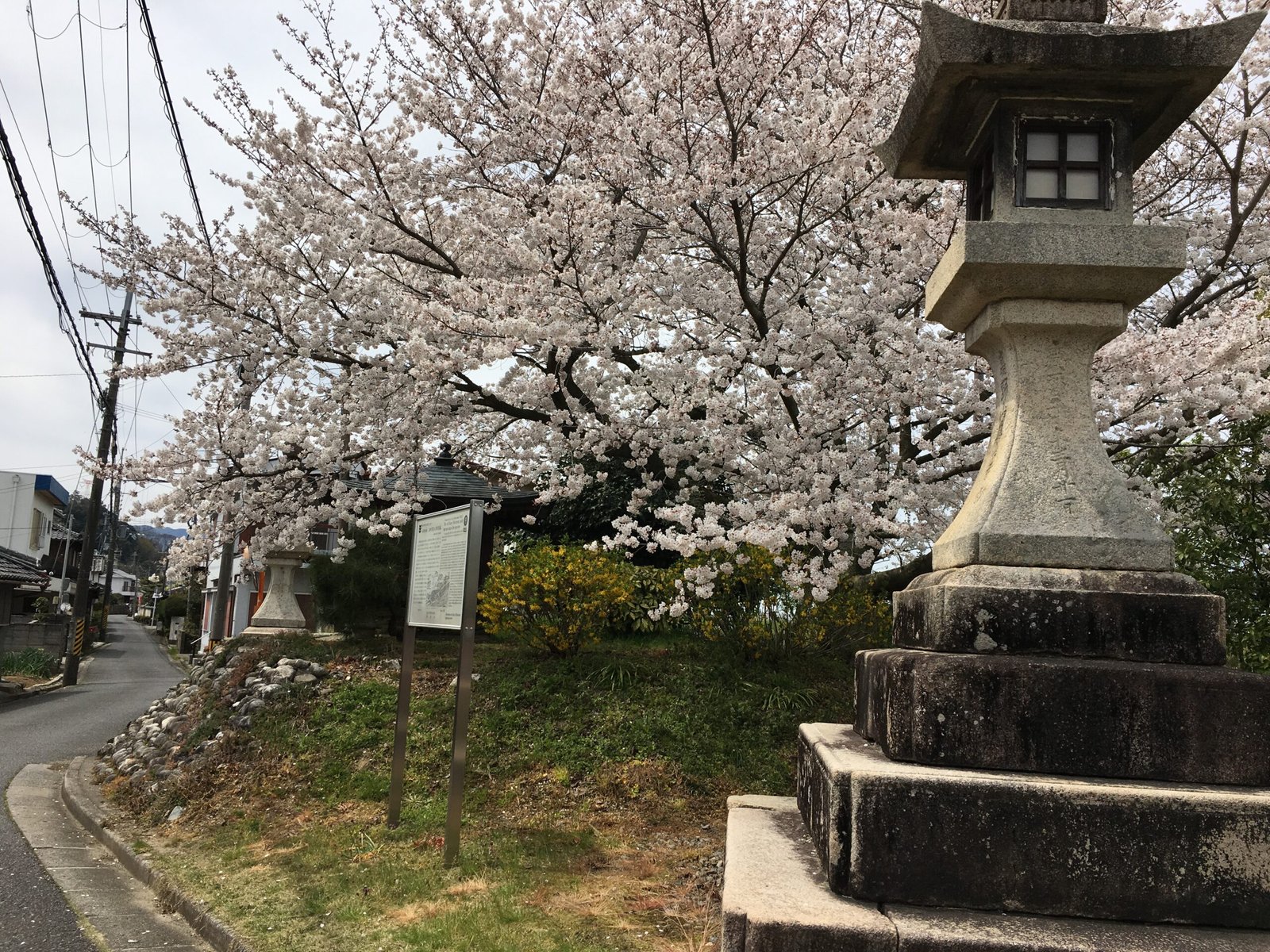
One surviving reminder of those crossings is a stone lantern built at the former ferry landing.
A traditional Japanese lantern holds a light within a protective structure. Here, beside the river crossing, it formed part of the landscape through which travelers found their way.
Built in 1814, the lantern bears inscriptions on its base recording contributions from merchants in distant places, people involved in river transport, and other donors. (6)
After the bridge came the boats. At the crossing were people who helped provide a light.
What began as the history of one town opens onto the lives of people far beyond it. The simple act of crossing a river belonged to a much wider world of travel, work, and faith.
Seen in this light, the survival of the name Hashimoto carries a different weight.
The bridge disappeared, but people continued to visit, to live here, and to speak the town’s name.
Each time they used it, the name became part of another day.
The “Hashimoto” we hear announced at the station today belongs to that long passage of time.
Looking Back at the Bridge We Have Crossed
When we cross a bridge, we naturally look ahead.
What will we do on the other side? Where will we go next?
The more certain our footing, the less we tend to notice what is supporting us.
Learning the history of Hashimoto feels a little like turning around to look at a bridge we have just crossed.
A town that barely caught our attention when we marked our destination on a map begins to take shape. We start to see the place that helped make the journey possible.
We are drawn to this kind of beauty—the kind that comes into view a little later. It is part of why we have chosen to live here.
Still, calling a town “quiet and beautiful” does not mean we have come to know it.
Within the landscape before us are people working, caring for things, and carrying on with their lives. Beyond a traveler’s brief stay, the town’s day continues.
Remembering this can change the way we travel.
When we come across the name of an old road, we can wonder where it once led.
When we notice a stone monument beside the river, we can ask why it stands there.
As unfamiliar things become connected to human actions and hopes, the landscape gradually becomes something we can read.
We do not need a detailed knowledge of Japanese history to begin.
Someone needed to cross a river.
Someone else helped make that crossing possible.
From there, even a town in the distant past can begin to feel connected to our own lives.
Hashimoto and YUI Studio
When we learned the story behind this town’s name, we found ourselves thinking again about our own.
For us, YUI carries the meaning of the Japanese character 結.
Used in the word musubu, meaning “to tie” or “to connect,” it can describe joining threads or forming bonds between people.
The bridge in Hashimoto. The connection in YUI.
Perhaps we feel an affinity between them because each reaches toward something beyond itself.
A bridge has another bank. A thread has another end to meet.
And on the other side of every story we share is someone reading it.
That person may not speak Japanese.
They may be encountering the name Koyasan for the first time.
They may see a stone lantern without yet knowing how it relates to the people who once traveled past it.
We want to write words that help cross that distance.
To unfold the meaning of a name.
To give an unfamiliar custom its context.
To tell an old story through the lives of the people who were part of it.
Sometimes a single piece of explanation can bring a distant landscape within reach.
Once we have offered those starting points, we want to leave room for the reader’s own response.
What will the river bring to mind?
What will they discover along the road?
What, in this town, will hold their attention?
There can be as many answers as there are people who visit.
A bridge does not decide where you go after crossing it.
We hope YUI Studio can offer something similar: a little support for the first step toward a place, and the people who call it home.
The Story Continues
At the beginning of this article, Hashimoto may have been no more than a sound.
Perhaps now, behind the name, you can picture a river and someone making their way across it.
Perhaps one day, hearing it announced at a station, you will think not only about your next connection, but also about the town where you are standing.
Then the story has already become part of the journey.
The old bridge is gone.
Yet the name of the place at its foot still welcomes people today.
From here, we will keep writing words that reach toward someone new.
In the Next Journal
Where did travelers go after crossing the river?
In our next article, we will follow the Koya Kaido, a historic route toward the sacred temples of Koyasan, exploring how Hashimoto welcomed travelers and how life continues along the road today.
Sources
Wakayama Prefecture: Pilgrimage Routes to Koyasan — Koyasan’s setting and the historic routes leading to it. In Japanese.
Kongobu-ji: 1,200 Years of Mount Koya — Koyasan’s founding and religious history. In English.
Kongobu-ji: Koyasan Shingon Buddhism — The teachings and practices of the tradition. In Japanese.
Hashimoto City: Ōgo — His religious life and contribution to the town. In Japanese.
Hashimoto City: The Monk Who Founded the Town — The town’s founding, the bridge tradition, and the origin of its name. In Japanese.
Hashimoto City: The Stone Lantern at the Tōge Ferry Landing — See the city’s cultural-property record for the river crossing, lantern, and donor inscriptions. In Japanese.